
The Race for AI Chips: How Hardware Is Shaping the Future of AI
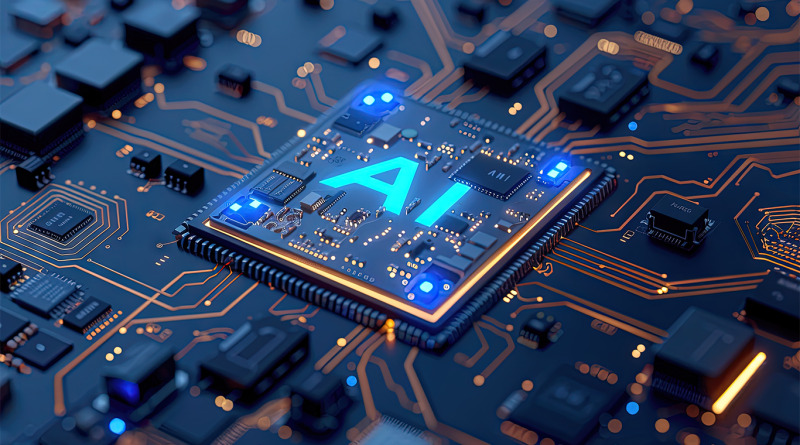
When people talk about artificial intelligence, most of the focus usually goes to software—chatbots, image generators, recommendation systems, and smart assistants. But behind every AI breakthrough, there’s something less visible but just as important: hardware. In particular, AI chips have become one of the biggest drivers of progress in artificial intelligence.
Today, the race for AI chips is intensifying. Tech companies, semiconductor manufacturers, and even governments are investing heavily in building faster and more efficient processors. The reason is simple: without powerful hardware, even the most advanced AI models cannot function effectively. Hardware is not just supporting AI anymore—it’s shaping its future.
Why AI Needs Specialized Chips
Artificial intelligence requires enormous computing power. Training a large AI model involves processing massive datasets and performing billions or even trillions of calculations. Traditional CPUs, which are designed for general-purpose computing, struggle to handle these workloads efficiently.
This is where specialized hardware comes in.
Graphics processing units (GPUs), AI accelerators, and custom-designed chips are built to perform parallel processing, which is essential for machine learning tasks. These chips can process large volumes of data simultaneously, making them much faster and more efficient for AI workloads.
As AI models grow larger and more complex, the demand for this kind of hardware keeps increasing.
The Growing Competition in AI Hardware
The race for AI chips is no longer limited to traditional semiconductor companies. Major technology firms are now designing their own processors to reduce dependence on external suppliers and optimize performance for their platforms.
There are several reasons behind this trend. First, custom chips allow companies to tailor hardware specifically for their software, improving speed and efficiency. Second, owning the hardware stack can reduce long-term costs and provide more control over product development.
Cloud providers are also investing heavily in AI infrastructure. Massive data centers filled with specialized chips are becoming the backbone of modern AI services, enabling businesses around the world to run complex models without building their own infrastructure.
This competition is pushing innovation forward at an incredible pace.
Hardware Is Enabling Bigger and Better AI Models
One of the most important ways hardware is shaping the future of AI is by enabling larger models. Over the past few years, AI systems have grown dramatically in size and capability, but this growth would not have been possible without improvements in computing power.
Faster chips mean researchers can train models more quickly, experiment with more complex architectures, and process larger datasets. This leads to more accurate predictions, better language understanding, and more realistic image or video generation.
In other words, progress in AI software is closely tied to progress in hardware.
Energy Efficiency Is Becoming a Major Focus
As AI systems become more powerful, they also consume more energy. Training large models can require enormous amounts of electricity, and running them at scale in data centers adds even more demand.
Because of this, energy efficiency has become a key factor in chip design.
Modern AI processors are being optimized not only for speed but also for power efficiency. Reducing energy consumption helps companies lower operating costs and reduce environmental impact. For large-scale cloud platforms, even small improvements in efficiency can translate into significant savings.
This focus on efficiency is likely to shape the next generation of AI hardware.
The Rise of Edge AI
While much of the AI chip race is focused on data centers, another important trend is emerging: edge AI. This refers to running AI directly on devices rather than relying entirely on cloud computing.
Smartphones, security cameras, wearable devices, and even cars are now equipped with AI chips that allow them to process data locally. This reduces latency, improves privacy, and allows devices to function even without a constant internet connection.
For example, voice assistants can process commands instantly, and cameras can recognize objects in real time. These capabilities are possible because of compact and efficient AI processors designed specifically for edge devices.
As more devices become “smart,” demand for these chips will continue to grow.
Supply Chains and Global Strategy
The importance of AI chips has also turned them into a strategic priority for many countries. Semiconductor manufacturing is complex and expensive, and production is concentrated in a few regions. This has made supply chains a critical issue for governments and industries alike.
In recent years, many countries have introduced initiatives to support domestic chip production, invest in research, and strengthen supply chain resilience. The goal is to ensure stable access to advanced hardware, which is increasingly seen as essential for economic growth and technological leadership.
This global dimension adds another layer to the competition around AI hardware.
Challenges in the AI Chip Industry
Despite rapid progress, the AI hardware industry faces several challenges.
One major challenge is cost. Designing and manufacturing advanced chips requires billions of dollars in investment, specialized facilities, and highly skilled engineers. Only a limited number of companies can operate at this scale.
Another challenge is the pace of innovation. AI workloads evolve quickly, which means hardware designs must constantly adapt. Chips that are cutting-edge today may become outdated within a few years.
There are also technical challenges, such as managing heat, improving memory bandwidth, and increasing processing efficiency. Solving these problems requires ongoing research and development.
Why Businesses Should Pay Attention
Even companies that don’t design chips should pay attention to the race for AI hardware. The availability and performance of AI infrastructure directly affect the cost and capabilities of AI services.
For example, faster hardware can reduce the time needed to analyze data, generate insights, or run automation workflows. This can improve productivity and help businesses respond more quickly to market changes.
Choosing the right platforms and tools often means considering the hardware behind them. Performance, scalability, and reliability all depend on the underlying infrastructure.
The Future of AI Hardware
Looking ahead, the race for AI chips is expected to accelerate. As artificial intelligence expands into fields like healthcare, robotics, transportation, and finance, demand for powerful and efficient processors will continue to rise.
We are also likely to see more specialized chips designed for specific tasks, such as natural language processing, computer vision, or scientific simulations. These purpose-built processors can deliver better performance than general-purpose hardware.
Another important trend is closer integration between hardware and software. Companies are designing systems where processors, operating systems, and AI models are optimized to work together seamlessly. This approach can significantly improve efficiency and performance.
Conclusion
The race for AI chips is one of the most important developments in the technology world today. While software often gets the spotlight, hardware is the foundation that makes modern AI possible.
Powerful and efficient chips enable larger models, faster processing, and new applications that were once impossible. They also shape how businesses adopt AI and how quickly innovation can happen.
As competition in AI continues to grow, the companies and countries that lead in hardware development will likely play a major role in shaping the future of artificial intelligence.
In the end, the future of AI isn’t just about smarter algorithms—it’s about the silicon that powers them.