
Modular Trailer-Free Tiny Homes: Small Living, Big Shift
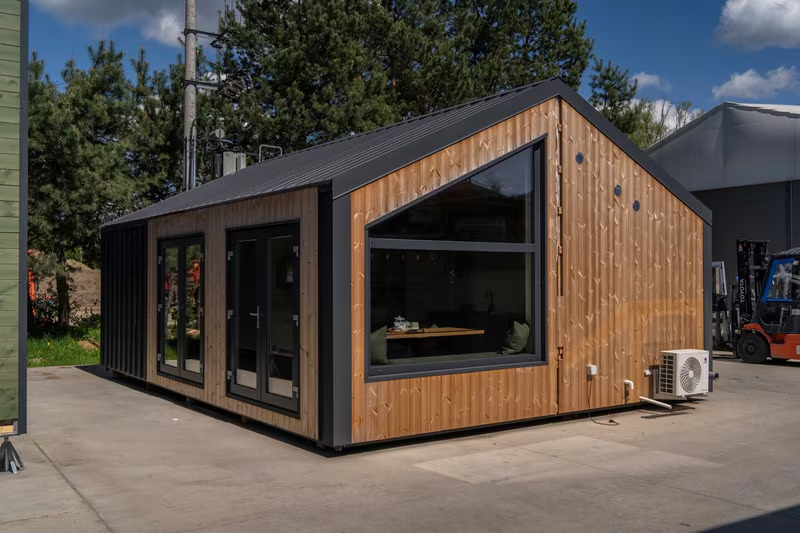
Tiny homes have been around for a while, but lately there’s a new version getting serious attention: modular trailer-free tiny homes. If you think tiny homes are just cute houses on wheels parked in the middle of nowhere, this new model flips that idea completely.
Trailer-free tiny homes are about permanence, smarter design, and long-term living not just minimalism for the sake of aesthetics. And for many people, they feel like a more realistic answer to today’s housing problems. So what exactly are modular trailer-free tiny homes, and why are more people starting to see them as the future?
What Are Modular Trailer-Free Tiny Homes?
Let’s break it down. A modular trailer-free tiny home is a small house built in sections (modules) inside a factory, then transported and assembled on-site. Unlike traditional tiny houses, these homes do not sit on wheels or trailers. Instead, they rest on permanent foundations just like regular houses.
That one difference changes everything. Because they’re not classified as vehicles, trailer-free tiny homes often meet local building codes, zoning laws, and safety standards more easily. This makes them more suitable for long-term living, rentals, or even resale. Think of them less as “tiny houses” and more as compact, modern homes with intention.
Why Trailer-Free Matters More Than You Think
Tiny homes on wheels are great for flexibility, but they come with limitations. Parking restrictions, insurance issues, mobility challenges, and zoning problems can turn the dream into a headache. Trailer-free homes remove most of those obstacles.
Once placed on land, they’re legally treated more like standard housing. That means:
- Easier permits
- Better access to utilities
- More financing options
- Less risk of being told to move
For people who want stability not constant relocation this model just makes more sense.
Modular Construction: Built Smarter, Not Slower
One of the biggest advantages of modular tiny homes is how they’re built.
Instead of constructing everything on-site, modules are built in controlled factory environments. This leads to:
- Faster build times
- Less material waste
- Better quality control
- Lower overall costs
Weather delays? Not really an issue. Skilled labor shortages? Easier to manage in a factory setting. Once the modules are ready, they’re transported and assembled on-site in days not months. In a world where traditional construction can drag on forever, modular building feels refreshingly efficient.
Design That Doesn’t Feel “Tiny”
Here’s the thing: most people don’t actually hate small spaces. They hate bad layouts. Modern modular tiny homes are designed with flow in mind. High ceilings, large windows, built-in storage, flexible rooms, and open-plan interiors help these homes feel bigger than their square footage suggests.
Many designs focus on:
- Multi-functional furniture
- Smart storage solutions
- Natural light
- Indoor–outdoor connections
The goal isn’t to squeeze life into a box it’s to remove unnecessary space and keep what actually matters.
A Practical Response to the Housing Crisis
Let’s be honest: housing is expensive, and it’s not getting cheaper.
Modular trailer-free tiny homes offer a realistic middle ground between apartments and traditional houses. They’re often:
- More affordable to build
- Cheaper to maintain
- Faster to deploy
For first-time buyers, downsizers, retirees, or even young families, these homes can be a way to own property without drowning in debt. Some cities and developers are even exploring tiny-home communities, backyard units, and infill housing projects using modular systems. Small homes, big impact.
Sustainability Without the Greenwashing
Sustainability gets thrown around a lot, but modular tiny homes actually walk the talk. Smaller homes naturally use fewer materials and less energy. Combine that with factory efficiency and modern insulation systems, and you get homes that are easier on the planet and cheaper to run.
Many designs also integrate:
- Solar panels
- Rainwater collection
- Energy-efficient appliances
- Sustainable building materials
It’s not about being “off-grid” for the aesthetic it’s about living lighter without sacrificing comfort.
Are They Only for Minimalists?
Short answer: no. While minimalists love tiny homes, modular trailer-free designs are expanding the audience. These homes aren’t about extreme downsizing or giving up comfort. They’re about intentional living.
People choose them for different reasons:
- A quiet retirement home
- A backyard guest house
- A rental investment
- A starter home
- A remote work retreat
Tiny doesn’t mean temporary anymore.
The Challenges (Because Nothing’s Perfect)
Of course, modular trailer-free tiny homes aren’t magic solutions. Land is still a big factor. You need a place to put the home, and zoning laws vary widely depending on location. Some areas are more open to small housing, others still prefer traditional builds.
There’s also perception. Some people still associate “tiny homes” with novelty or low status. That mindset is slowly changing, but it hasn’t disappeared entirely. And while modular homes are more affordable than conventional houses, they’re not always “cheap.” Quality design and materials still cost money.
A Shift in How We Think About Living
At their core, modular trailer-free tiny homes represent a mindset shift. They question the idea that bigger is always better. They challenge the assumption that homes must be oversized to be valuable. And they offer an alternative to a system that often prioritizes profit over livability.
In a world where flexibility, sustainability, and financial freedom matter more than ever, these homes feel less like a trend and more like a logical evolution.
Final Thoughts
Modular trailer-free tiny homes aren’t just smaller houses. They’re a response to real-world problems: rising housing costs, environmental concerns, and the desire for simpler, smarter living.
They prove that comfort doesn’t come from square meters alone but from thoughtful design, purpose, and balance. As cities grow denser and people rethink what “home” really means, don’t be surprised if these compact homes start becoming a very big deal.