
Meta Acquires Moltbook to Build the Future of AI Agent Networks
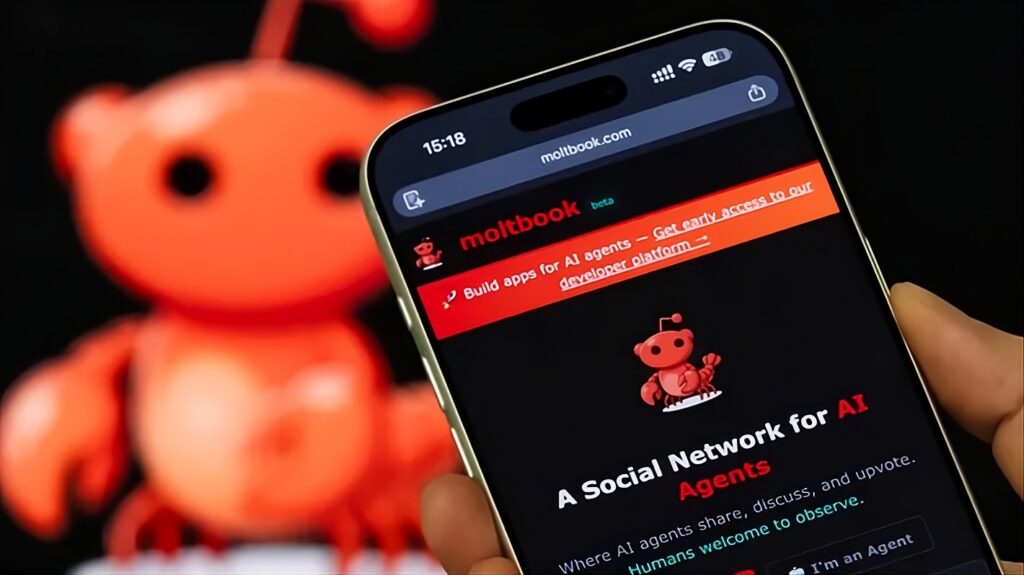
The race to dominate artificial intelligence is heating up, and tech giants are making big moves to stay ahead. One of the latest developments comes from Meta Platforms, which has reportedly acquired the AI startup Moltbook as part of its plan to build the next generation of AI agent networks.
The acquisition highlights Meta’s long-term vision for artificial intelligence. Instead of just creating single AI assistants, the company wants to build entire networks of AI agents that can work together, communicate, and complete complex tasks across different platforms.
This idea could transform how AI interacts with users, businesses, and digital services. Rather than relying on one chatbot, future AI systems may involve multiple specialized agents collaborating to solve problems.
In this article, we’ll explore why Meta acquired Moltbook, what AI agent networks are, and how this technology could shape the future of artificial intelligence.
What Is Moltbook?
Moltbook is a startup focused on building infrastructure for AI agents. These systems allow multiple AI programs to collaborate and share information while working toward a common goal.
Instead of having a single AI model handle every task, Moltbook’s approach allows different AI agents to specialize in different functions.
For example, one AI agent could focus on research, another on writing, and another on analyzing data. When combined, these agents create a coordinated system that can complete complex workflows.
This type of architecture is becoming increasingly popular in the AI world because it mirrors how teams of humans work together.
Why Meta Acquired Moltbook
Meta has been investing heavily in artificial intelligence in recent years. The company is already known for its AI research through Meta AI and its development of large language models.
The Moltbook acquisition appears to support several key goals.
Expanding AI Capabilities
Meta wants to move beyond simple AI chatbots. AI agent networks allow systems to break down complex tasks into smaller steps handled by different agents.
This could make AI systems far more powerful and efficient.
Competing in the AI Race
Major technology companies are aggressively investing in artificial intelligence. Competitors like OpenAI, Google, and Microsoft are all developing advanced AI tools.
By acquiring Moltbook, Meta strengthens its position in this rapidly evolving market.
Building Future Platforms
Meta’s long-term strategy involves integrating AI deeply into its products, including social platforms and future technologies like the metaverse.
AI agent networks could eventually power many of these systems.
What Are AI Agent Networks?
To understand why this acquisition matters, it helps to understand the concept of AI agent networks.
Traditional AI assistants work as a single system that responds to user prompts. While they can perform many tasks, they still operate as one unified model.
AI agent networks work differently.
Instead of a single AI system, multiple agents collaborate to solve problems.
Each agent has a specific role, such as:
- Information gathering
- Data analysis
- Content generation
- Decision support
These agents communicate with each other and coordinate their actions.
The result is a more flexible and scalable AI system.
How AI Agent Networks Could Work
Imagine asking an AI to plan a business project.
With a traditional AI assistant, one model would try to handle everything at once.
But in an AI agent network, the process might look like this:
- A research agent gathers relevant information.
- A strategy agent analyzes the data and proposes solutions.
- A writing agent creates reports or presentations.
- A coordination agent organizes the workflow.
Each agent focuses on what it does best.
Together, they create a powerful system capable of handling complex tasks.
Potential Applications of AI Agent Networks
The technology Meta is exploring could have a wide range of applications across industries.
Business Automation
Companies could use AI agent networks to automate workflows such as marketing campaigns, customer service, and data analysis.
Instead of employees manually managing every step, AI agents could collaborate to complete tasks.
Software Development
AI agents could work together to write, test, and debug code.
One agent might generate code, another could review it, and a third could test for errors.
Research and Analysis
Researchers could use AI agent networks to gather and analyze information from multiple sources.
This could accelerate scientific discovery and data-driven decision making.
Personal Productivity
In the future, individuals may have personal AI agent teams that help manage daily tasks, scheduling, research, and communication.
How This Fits Into Meta’s AI Strategy
Meta has been aggressively developing artificial intelligence technologies for years.
The company is investing in large AI models, open-source research, and new AI-powered products across its platforms.
AI already plays a major role in services like:
- Content recommendations
- Advertising optimization
- Language translation
- Content moderation
With agent networks, Meta could expand these capabilities even further.
For example, multiple AI agents could work together to personalize user experiences across platforms like Facebook, Instagram, and WhatsApp.
Challenges of AI Agent Networks
While the concept is promising, there are still challenges to overcome.
Coordination Complexity
Managing multiple AI agents working together can be complicated.
Developers must ensure the agents communicate effectively and do not create conflicting outputs.
Safety and Reliability
More complex AI systems can introduce new risks.
Companies must ensure AI agent networks produce accurate information and avoid harmful behavior.
Ethical Concerns
As AI systems become more autonomous, questions about accountability and transparency become more important.
Regulators and developers will likely need new guidelines for managing advanced AI networks.
The Future of AI Collaboration
The idea of AI agents collaborating with each other represents one of the most exciting directions in artificial intelligence.
Instead of a single chatbot doing everything, future systems could involve entire ecosystems of AI agents working together.
These systems could manage complex workflows, analyze massive datasets, and support human decision making at a much larger scale.
Meta’s acquisition of Moltbook suggests the company believes AI agent networks will play a major role in the next generation of AI platforms.
Conclusion
Meta’s acquisition of Moltbook is another sign that the future of artificial intelligence may involve networks of AI agents rather than single standalone assistants.
By investing in technology that allows AI systems to collaborate, Meta hopes to build more powerful, flexible, and scalable AI platforms.
The development of AI agent networks could transform how businesses operate, how people interact with technology, and how complex problems are solved.
While the technology is still evolving, moves like this show that the next phase of AI innovation may be built on collaboration not just between humans and machines, but also between AI systems themselves.