
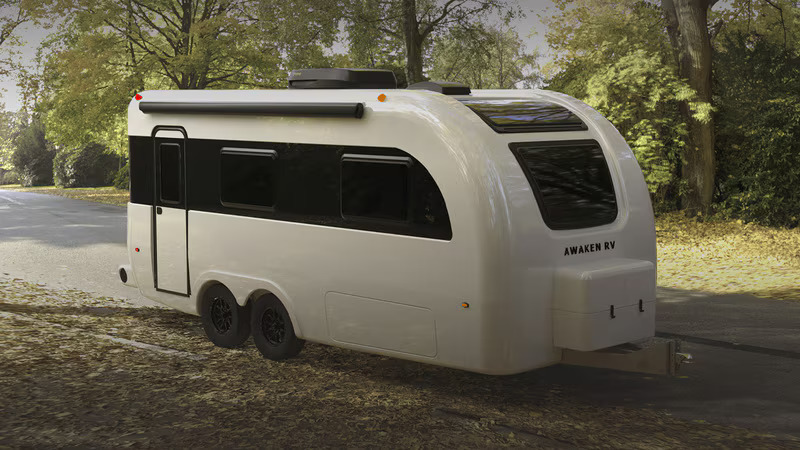
If you’ve been even slightly curious about RV life lately, you’ve probably noticed the same thing a lot of buyers are complaining about: new rigs look great on Instagram, but in real life they can feel… rushed. Thin materials, leaky seams, rattly interiors, and that “please don’t break on day three” energy. That’s the exact problem Awaken RV is walking into—and the MorningStar is their big statement piece: a sleek, design-forward, off-grid-ready fiberglass rig built to last longer than a weekend.
One quick note though: some headlines call it a “motorhome,” but the MorningStar is primarily being presented as a molded fiberglass travel trailer, not a self-driving Class A/B/C motorhome. Awaken also mentions a MorningStar-i variant on their site, but the core story making the rounds is still very much about the fiberglass towable.
So… what makes it special?
The big idea: “Build it like a boat, not like a cardboard box”
MorningStar’s biggest flex is its double-hull molded fiberglass construction. In simple terms: instead of the common “stick-and-tin” style (wood framing + sheet material + lots of seams), Awaken is going for a seamless fiberglass shell approach that’s closer to how durable marine stuff is made. The promise is fewer weak points, better resistance to rot/leaks/delamination, and a longer lifespan overall.
That matters because RV ownership pain is usually not “the bed is too small.” It’s “why is water getting in there” and “why does this feel like it was assembled in a hurry.” A molded fiberglass shell is basically a bet on durability—and Awaken is leaning hard into that bet.
It’s luxury, but not in a fake marble way
A lot of “luxury RV” marketing means shiny surfaces and vibes. MorningStar’s approach looks more like: clean European-inspired exterior styling, then a more refined interior with premium materials and smart use of space. They specifically mention details like solid wood cabinetry, acrylic windows, and a 24 sq ft dry bath—which is honestly a big deal because most trailers at this size love to compromise on bathrooms.
The goal feels less like “rolling nightclub” and more like “tiny modern apartment you can tow.”
Off-grid readiness that’s actually practical
The other headline feature is off-grid capability—because in 2026, an RV without off-grid features is like a phone without a camera. MorningStar is positioned as off-grid ready, and the published specs floating around are pretty solid for real-world camping:
-
500W+ solar (flexible panels are mentioned)
-
Around 250–270Ah lithium depending on the source/trim being referenced
-
A 3,000W inverter/charger system (again, mentioned across sources)
-
Climate support like ducted heat and AC / Truma systems depending on configuration
This kind of setup is meant to let you stay off-grid longer without living like you’re in survival mode. Run your basics, charge your gear, keep the interior comfortable, and not panic every time you’re away from hookups.
Real capacities, real trips
Off-grid isn’t only about solar and batteries—it’s also water. Multiple sources list the MorningStar with tanks around:
-
39 gallons fresh
-
32 gallons gray
-
18 gallons black
That’s a pretty reasonable balance for extended weekends or longer stays if you’re not wasting water like you’re in a hotel.
Size and weight: not tiny, not a monster
MorningStar is roughly in the 23–24 ft range depending on how it’s measured/listed, and the dry weight being reported is around 5,320 lbs.
That puts it in a zone where it’s still towable by a decent number of trucks/SUVs (depending on towing capacity), but it’s not “micro trailer” light either. Basically: it’s aiming at buyers who want a premium build and are okay with a proper tow setup.
The pricing conversation: “mid-priced” (…kinda?)
Here’s where people start arguing online. Some coverage frames MorningStar as “mid-market” or “smart price,” but reported starting prices around $88,900 instantly make a lot of folks go: “mid-market for who?”
And yeah—there are comparisons being made to brands like Airstream and Oliver, where pricing gets complicated fast once you look at standard gear vs options. The honest read is: MorningStar is not “budget-friendly.” It’s more like premium-focused, and Awaken is trying to justify price through construction quality, long-term durability, and a more modern design approach.
If you’re the type who upgrades rigs often, you might not care. But if you want something you can keep for years without constant repairs, that durability pitch can actually make sense.
Why people are paying attention
Awaken RV is showing up at the right moment. RV buyers have gotten way more educated (and way less forgiving) about build quality. The MorningStar is basically aimed at the buyer who says:
-
“I want something that won’t rot out.”
-
“I want a trailer that feels like it was designed, not just assembled.”
-
“I want off-grid that’s not just a marketing sticker.”
And it’s getting attention in the RV world because it’s trying to do two hard things at once: bring higher-end construction (molded fiberglass double hull) and still deliver modern interior comfort instead of the typical “fiberglass trailer minimalism.”
The vibe: for people who want calm luxury, not loud luxury
MorningStar doesn’t look like it’s made for party RV culture. It’s more like: early morning coffee, quiet lakeside, good lighting inside, and a clean layout that doesn’t scream “camping clutter.”
Even the branding signals that: MorningStar feels like something you’d name a boutique hotel suite, not a rugged off-road toy. And honestly, that’s probably intentional. Awaken seems to be chasing the kind of RV buyer who wants a premium lifestyle object—but still wants it to handle real travel.
The bottom line
The Awaken RV MorningStar is basically a “we can do better” response to the current RV market. It’s leaning on double-hull fiberglass durability, pushing a more design-forward interior, and bundling in an off-grid-ready power setup that’s actually usable for modern travel.
Will it be for everyone? No—because the price instantly filters out a huge crowd.
But if Awaken delivers on quality and long-term ownership, MorningStar could land in that sweet spot where people stop treating trailers as disposable and start treating them like something you keep.