
Apple Vision Pro Gets Nvidia CloudXR 6.0 Support for Cloud-Streamed VR
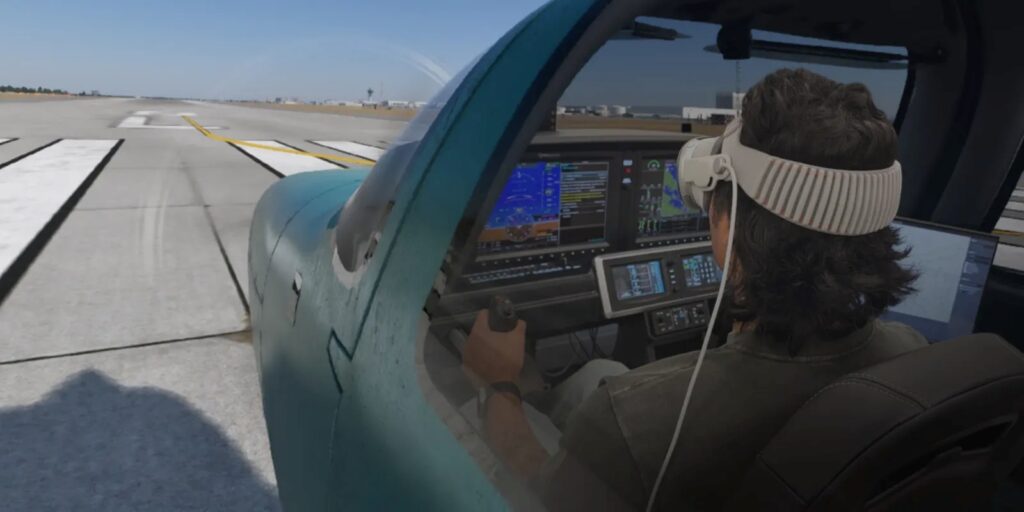
The world of immersive technology keeps evolving fast, and new partnerships between major tech companies are pushing virtual reality to the next level. One of the latest developments involves the powerful headset Apple Vision Pro and a new update from Nvidia that brings support for Nvidia CloudXR version 6.0.
This update allows the Vision Pro to stream high-quality virtual reality experiences directly from the cloud instead of relying entirely on local hardware. In simple terms, users can access advanced VR applications powered by powerful remote computers without needing massive processing power inside the headset itself.
Cloud streaming has already changed gaming and professional workflows in recent years, and now the same concept is expanding into extended reality. With Nvidia CloudXR 6.0 support, Apple’s premium mixed reality device becomes even more capable, especially for industries like design, simulation, and training.
In this article, we’ll explore how CloudXR works, why this update matters for Vision Pro users, and what it means for the future of cloud-based VR.
What Is Apple Vision Pro?
The Apple Vision Pro is Apple’s first spatial computing headset, combining virtual reality and augmented reality into one device.
Unlike traditional VR headsets, the Vision Pro focuses on blending digital content with the real world. Users can place virtual screens around their environment, interact with 3D objects, and run apps in a spatial interface.
Some key features of the headset include:
- Ultra-high resolution displays
- Eye tracking and hand gesture controls
- Spatial computing interface
- Powerful onboard processors
The device runs on a system called visionOS, which allows apps and experiences to exist within a 3D environment rather than a traditional flat screen.
However, even powerful headsets have limits when it comes to rendering extremely complex 3D environments. This is where cloud streaming technology becomes important.
What Is Nvidia CloudXR 6.0?
CloudXR is a platform designed by Nvidia to stream high-quality VR and AR content from powerful cloud servers directly to XR devices.
Instead of rendering graphics on the headset itself, the heavy processing happens on remote computers equipped with powerful GPUs. The resulting visuals are streamed to the headset in real time.
With the release of CloudXR 6.0, Nvidia improved several important aspects of the system:
- Lower latency for smoother interactions
- Better video compression for higher image quality
- Improved device compatibility
- Support for more XR hardware platforms
The addition of Vision Pro compatibility means developers can now deliver advanced VR applications to Apple’s headset through cloud infrastructure.
Why Cloud Streaming Matters for VR
Virtual reality applications often require enormous computing power, especially when rendering detailed environments or complex simulations.
Traditionally, this means users need expensive gaming PCs or powerful standalone headsets.
CloudXR changes this model by moving most of the heavy processing to remote servers.
This approach offers several advantages.
More Powerful Experiences
Because the graphics are rendered on high-end GPUs in data centers, applications can achieve far higher levels of detail than what a standalone headset could normally handle.
Reduced Hardware Limitations
Headsets no longer need extremely powerful processors to run advanced applications.
This could lead to lighter, more efficient devices.
Easier Software Distribution
Developers can host applications in the cloud and stream them to users, removing the need for large downloads or installations.
What Vision Pro Users Can Expect
With CloudXR 6.0 support, Vision Pro users could soon access a much wider range of immersive experiences.
These include:
Advanced VR Simulations
Industries like engineering, architecture, and aviation often rely on complex simulations that require powerful GPUs.
Cloud streaming allows these applications to run smoothly on headsets without needing workstation-level hardware.
High-End VR Gaming
Although Apple has not focused heavily on VR gaming so far, cloud streaming could allow developers to deliver graphically demanding games to Vision Pro users.
Enterprise Applications
Businesses increasingly use VR for training, collaboration, and design.
CloudXR makes it easier for companies to deploy these experiences across multiple devices without needing specialized computers for each user.
Benefits for Developers
The integration between Vision Pro and CloudXR also opens new possibilities for developers.
Instead of optimizing every application to run locally on the headset, developers can leverage powerful cloud GPUs.
This simplifies development for certain types of applications.
Some advantages include:
- Access to Nvidia RTX graphics in the cloud
- Easier scaling for enterprise users
- Faster deployment of updates
Developers building professional XR tools may especially benefit from this approach.
The Role of Nvidia in XR Development
Nvidia has played a major role in advancing graphics technology for decades.
Its GPUs power everything from gaming PCs to AI systems and data centers.
In the XR world, Nvidia focuses on enabling high-performance rendering through both hardware and software platforms.
CloudXR is one of the company’s key tools for bringing high-end graphics to lightweight XR devices.
By supporting Vision Pro, Nvidia expands its ecosystem and connects Apple’s headset to a much larger XR infrastructure.
Challenges of Cloud-Based VR
Despite its potential, cloud streaming for VR still faces several technical challenges.
Internet Speed Requirements
Streaming high-resolution VR content requires fast and stable internet connections.
Users with slower networks may experience lag or lower image quality.
Latency Issues
Even small delays between user movements and visual updates can affect immersion in VR.
Reducing latency is one of the biggest engineering challenges in cloud streaming.
Infrastructure Costs
Running powerful GPUs in the cloud requires large data centers, which can be expensive for companies to operate.
However, improvements in networking and edge computing may help solve many of these issues over time.
How This Fits Into the Future of Spatial Computing
Apple has repeatedly described Vision Pro as the beginning of a new era called spatial computing.
In this vision, digital content exists around users in a three-dimensional space rather than on traditional screens.
Cloud computing may become a key part of this future.
Instead of storing and running everything locally, spatial computing systems could rely heavily on cloud infrastructure to deliver powerful experiences.
The integration with CloudXR shows how different tech ecosystems can work together to make this possible.
The Growing XR Ecosystem
The XR industry is expanding quickly as companies invest in new hardware, software, and platforms.
Major players include:
- Apple
- Meta Platforms
- Microsoft
- Nvidia
Each company brings different strengths to the ecosystem, from hardware innovation to cloud infrastructure and AI.
Collaborations like Vision Pro support for CloudXR suggest that the XR market may increasingly rely on cross-platform technologies.
Conclusion
The addition of Nvidia CloudXR 6.0 support for Apple Vision Pro represents an important step forward for cloud-streamed virtual reality.
By allowing high-performance VR applications to run in the cloud and stream directly to the headset, the technology removes many traditional hardware limitations.
For users, this could unlock richer immersive experiences. For developers and businesses, it creates new opportunities to build powerful XR applications without being constrained by local hardware.
As networking technology improves and cloud infrastructure expands, cloud-based VR may become a major part of the future of spatial computing.
With Vision Pro now entering the CloudXR ecosystem, the path toward truly scalable immersive experiences looks more promising than ever.