
Holzrausch References Luis Barragán in Colorful Mallorca Holiday Home Refresh
Architecture often evolves by borrowing ideas from the past while adapting them to modern lifestyles. A great example of this approach can be seen in a newly refreshed holiday home in Mallorca, redesigned by the German studio Holzrausch.
The renovation draws inspiration from the legendary Mexican architect Luis Barragán, known for his bold use of color, sculptural geometry, and emotional spatial design. By referencing Barragán’s architectural language, Holzrausch created a striking yet calm retreat that blends Mediterranean living with modern design sensibilities.
Located on the Spanish island of Mallorca, the holiday home combines warm earthy tones, geometric volumes, and strong connections to outdoor spaces. The result is a peaceful vacation residence that feels both contemporary and timeless.
In this article, we’ll explore how Holzrausch transformed the Mallorca property, how Barragán’s influence appears in the design, and why the renovation stands out as a unique example of Mediterranean architecture.
A Mediterranean Home With a Modern Identity
Mallorca has long been a favorite destination for vacation homes thanks to its sunny climate, natural landscapes, and relaxed lifestyle. However, many older homes on the island require renovation to meet modern living standards.
The property redesigned by Holzrausch originally had a traditional Mediterranean structure. Instead of completely rebuilding the house, the studio chose to refresh and reinterpret the architecture while respecting its original character.
The renovation focuses on:
- Strong geometric forms
- Warm natural colors
- Seamless indoor-outdoor living
- Minimalist yet expressive design
These elements give the house a modern identity while still fitting naturally into the surrounding landscape.
Inspiration From Luis Barragán
One of the most distinctive aspects of the project is its clear reference to the architectural philosophy of Luis Barragán.
Barragán is widely regarded as one of the most influential architects of the 20th century. His work is famous for combining minimalist architecture with vibrant color palettes and poetic spatial compositions.
Instead of copying Barragán’s designs directly, Holzrausch interpreted his ideas in a Mediterranean context.
Some of the key influences include:
Bold Color Surfaces
Barragán often used intense colors like pink, red, and ochre to create emotional spaces.
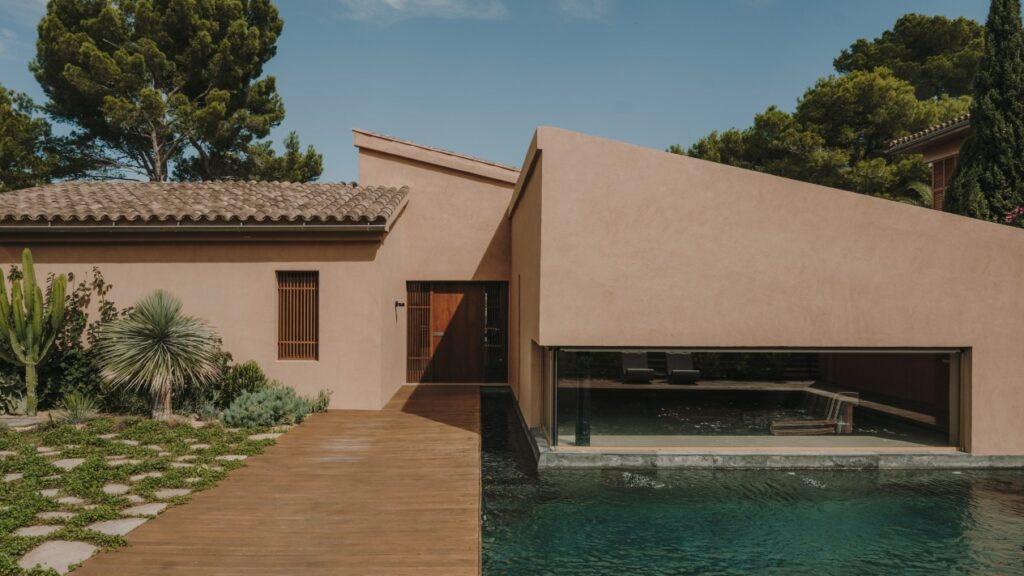
In the Mallorca home, Holzrausch applied warm terracotta tones across the exterior walls. The color reflects the Mediterranean sunlight beautifully and creates a strong visual presence without feeling overwhelming.
Sculptural Geometry
Barragán’s buildings are known for their simple but powerful shapes.
The renovated house features clean rectangular volumes that create a sculptural appearance. These shapes give the building a modern look while also producing dramatic light and shadow throughout the day.
Emotional Spatial Design
Barragán believed architecture should evoke emotion and serenity.
The Mallorca home follows this philosophy by creating calm, private spaces that encourage relaxation and contemplation.
A Seamless Connection Between Indoor and Outdoor Living
One of the most important aspects of Mediterranean architecture is the relationship between indoor spaces and outdoor environments.
Holzrausch designed the house so that interior rooms open directly toward terraces, gardens, and the swimming pool.
Large glass openings connect the living spaces to the exterior landscape, allowing natural light to flood the interiors.
The swimming pool sits directly beside the house and visually merges with the architecture. The calm water surface reflects the warm-colored walls, creating a peaceful atmosphere throughout the property.
Wooden decking around the pool adds warmth and contrasts beautifully with the terracotta façade.
A Minimalist Yet Warm Material Palette
The renovation focuses on a carefully selected palette of materials that feel natural and timeless.
Key materials include:
- Stucco walls in earthy tones
- Natural wood surfaces
- Stone and concrete flooring
- Large glass panels
These materials give the house a tactile quality while maintaining a minimalist aesthetic.
Instead of filling the home with decorative elements, the architects allowed light, shadow, and color to become the main design features.
This approach keeps the interior calm and uncluttered, perfect for a relaxing holiday retreat.
Designing for Privacy and Relaxation
Vacation homes often prioritize comfort and privacy. Holzrausch organized the layout of the house to create a series of quiet spaces where residents can unwind.
The design includes:
- Open living areas for social gatherings
- Private bedrooms separated from public spaces
- Outdoor terraces for lounging and dining
- Landscaped gardens that enhance privacy
This zoning ensures the house works equally well for entertaining guests or enjoying peaceful moments alone.
A Dialogue Between Architecture and Landscape
The surrounding environment plays an important role in the project.
Mallorca is known for its rugged coastline, pine forests, and Mediterranean vegetation. The architects integrated the house into this landscape rather than dominating it.
Native plants and drought-tolerant greenery surround the property, reinforcing the connection between architecture and nature.
The earthy color palette of the house also echoes the tones found in the island’s natural terrain.
As a result, the building feels like a natural extension of its surroundings.
Why the Project Stands Out
There are many renovated holiday homes in Mallorca, but this project stands out for several reasons.
A Unique Architectural Reference
Referencing Luis Barragán in a Mediterranean context is unusual and refreshing.
The combination of Mexican modernist inspiration with Spanish island architecture creates a distinctive design identity.
A Balanced Use of Color
Many modern homes rely heavily on neutral tones. This project demonstrates how color can be used thoughtfully without overwhelming the architecture.
The terracotta walls create warmth and character while remaining elegant.
Simplicity With Impact
The design proves that strong architecture does not require excessive complexity.
Simple forms, well-chosen materials, and careful spatial planning can produce powerful results.
The Growing Influence of Barragán’s Design Philosophy
Luis Barragán’s work continues to inspire architects around the world.
His emphasis on emotion, color, and spatial poetry resonates strongly with contemporary designers seeking alternatives to purely functional modernism.
Projects like the Mallorca holiday home show how Barragán’s ideas can be adapted to new cultural and geographic contexts.
Instead of copying historic styles, architects reinterpret them to create something fresh and relevant.
The Future of Mediterranean Holiday Home Design
As architectural trends evolve, many designers are moving away from overly minimalist white villas toward more expressive and contextual designs.
The Holzrausch renovation reflects this shift.
Future Mediterranean homes may increasingly focus on:
- Strong architectural forms
- Natural materials
- Climate-responsive design
- Emotional spatial experiences
These ideas create homes that feel more connected to their environment and more enjoyable for everyday living.
Conclusion
The Mallorca holiday home refreshed by Holzrausch demonstrates how architecture can honor the past while embracing modern design principles.
By drawing inspiration from Luis Barragán’s iconic use of color and geometry, the studio created a unique retreat that feels both contemporary and timeless.
Warm terracotta walls, sculptural forms, and strong connections to the surrounding landscape transform the property into a peaceful Mediterranean sanctuary.
The project highlights how thoughtful design choices—rather than excessive decoration—can create spaces that feel meaningful, beautiful, and deeply connected to their environment.
As architects continue exploring new ways to reinterpret historical influences, projects like this show that creativity often comes from blending ideas across cultures and traditions.