
Concrete Home in Slovenia by Skupaj Arhitekti Defies Contextual Mimicry
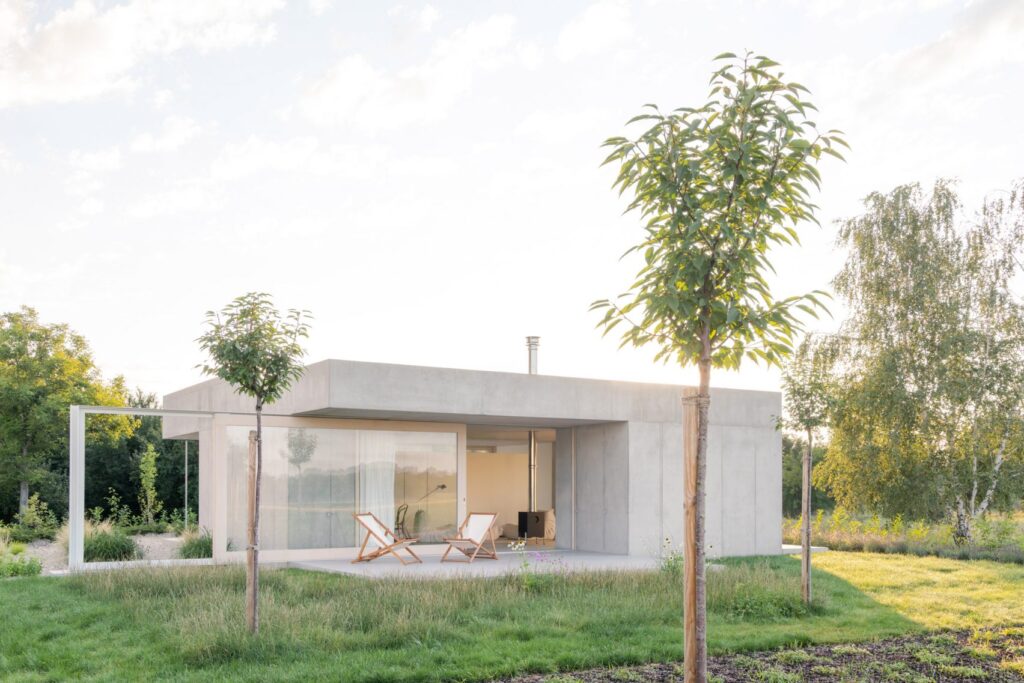
In many historic towns across Europe, new buildings are often expected to blend in with their surroundings. Architects are sometimes encouraged to copy traditional materials, roof shapes, and colors so that modern structures do not stand out too much. But not every architect agrees with that approach.
The concrete home in Slovenia by Skupaj Arhitekti takes a different path. Instead of mimicking the traditional architecture around it, the house embraces a bold contemporary design that clearly expresses its own identity.
Located in Slovenia, the residence uses raw concrete, simple geometric forms, and carefully designed openings to create a modern living space. The building does not try to hide its modern character. Instead, it stands confidently as a piece of contemporary architecture within a traditional setting.
This project highlights an interesting debate in architecture today. Should new buildings imitate the past, or should they represent the present?
A House That Refuses to Copy Its Surroundings
Many new homes built in historic areas try to replicate the style of older buildings nearby. Roof tiles, wooden shutters, and decorative details are often repeated to maintain visual continuity.
The concrete home in Slovenia by Skupaj Arhitekti intentionally avoids this strategy.
Rather than copying the surrounding houses, the architects chose a minimalist concrete form. The structure appears as a clean, sculptural volume that contrasts with the traditional buildings nearby.
This design approach is sometimes described as rejecting contextual mimicry. In simple terms, it means the building does not pretend to be something from another era.
Instead of blending in completely, the house creates a quiet dialogue with its surroundings. The contrast between old and new makes both styles more visible and meaningful.
The Power of Concrete as a Primary Material
Concrete plays a central role in the design of this Slovenian home. The architects used exposed concrete both structurally and visually.
The material gives the building a strong and timeless appearance. At the same time, the raw texture adds subtle character to the otherwise simple form.
Concrete is often associated with large urban buildings, but in residential architecture it can create a calm and grounded atmosphere. The smooth surfaces and natural color help the house feel modern without becoming overly flashy.
The use of concrete also emphasizes the honesty of the construction. Instead of hiding the structural material behind layers of finishes, the architects allowed the building to express how it was made.
This approach aligns with a broader trend in contemporary architecture where materials are celebrated rather than concealed.
A Minimalist Form with Strong Geometry
Another key feature of the concrete home in Slovenia by Skupaj Arhitekti is its clean geometric design.
The house is composed of simple volumes that appear carefully stacked and balanced. The design avoids unnecessary decoration and focuses instead on proportion and composition.
Large rectangular openings cut into the concrete walls to create windows and views toward the surrounding landscape. These openings also bring natural light deep into the interior spaces.
From certain angles, the house almost looks like a sculptural object placed within the landscape.
Despite its bold appearance, the building maintains a sense of calm because of its restrained design language.
Creating a Dialogue Between Old and New
Although the house does not mimic the architecture around it, the design still respects the context in other ways.
The scale of the building remains similar to neighboring homes. Its height and overall massing are carefully controlled so that it does not dominate the surroundings.
This thoughtful approach allows the concrete home in Slovenia by Skupaj Arhitekti to coexist with traditional buildings without trying to imitate them.
The contrast between materials also creates an interesting visual relationship. The rough textures and earthy tones of nearby structures highlight the smooth surfaces of the concrete house.
Instead of blending in completely, the building contributes a new layer to the architectural story of the area.
Interior Spaces Focused on Light and Simplicity
Inside the house, the design continues the same minimalist philosophy.
The interiors feature clean lines, neutral colors, and carefully selected materials. Concrete surfaces remain visible in certain areas, giving the interior a strong connection to the exterior architecture.
Large windows frame views of the surrounding landscape and bring natural light into the living spaces.
The layout is designed to feel open and flexible. Living areas connect easily to dining spaces and kitchens, creating a comfortable environment for everyday life.
Wood elements and soft furnishings are used to balance the cool appearance of the concrete. This combination helps the interior feel warm and inviting rather than industrial.
Balancing Privacy and Openness
Another interesting aspect of the house is how it handles privacy.
The street facing side of the building appears relatively closed, with fewer windows and a more solid concrete surface. This protects the interior from public view.
On the garden side, however, the architecture opens up with larger windows and outdoor connections.
This strategy allows the residents to enjoy natural light and views while maintaining a sense of privacy from the surrounding neighborhood.
It is a simple but effective design solution that many contemporary homes use today.
A Modern Statement in Slovenian Architecture
Slovenia has a strong architectural tradition that includes both historic buildings and modern design.
The concrete home in Slovenia by Skupaj Arhitekti contributes to this evolving architectural landscape. By choosing a bold contemporary expression, the project demonstrates that modern architecture can exist alongside traditional structures without conflict.
Rather than erasing the past, the house adds a new chapter to the built environment.
Projects like this show that architecture does not always need to imitate older styles to respect history. Sometimes a clear contrast can create a more honest and interesting result.
Why Context Does Not Always Mean Imitation
The idea of contextual design is often misunderstood.
Some people believe that respecting the context means copying nearby buildings exactly. But many architects argue that context can also be interpreted in more creative ways.
The concrete home in Slovenia by Skupaj Arhitekti reflects this alternative perspective.
The building responds to its surroundings through scale, proportion, and placement rather than stylistic imitation. This allows the architecture to feel connected to the site while still expressing a modern identity.
In this way, the project challenges the idea that new architecture must always look like the past.
Conclusion
The concrete home in Slovenia by Skupaj Arhitekti is a compelling example of contemporary residential architecture that confidently embraces its own identity.
By rejecting contextual mimicry, the house stands as a bold yet thoughtful addition to its surroundings. The use of exposed concrete, simple geometric forms, and carefully positioned openings creates a design that feels both modern and timeless.
Rather than copying the architecture around it, the building creates a meaningful contrast that highlights the diversity of architectural styles within the area.
This project reminds us that architecture evolves over time. Each generation contributes new ideas and materials while still respecting the places where buildings are constructed.
In the end, the Slovenian concrete home proves that modern design and historical context can coexist in a way that enriches the built environment.