
Holocene House Concept: Integrating Water and Architectural Geometry
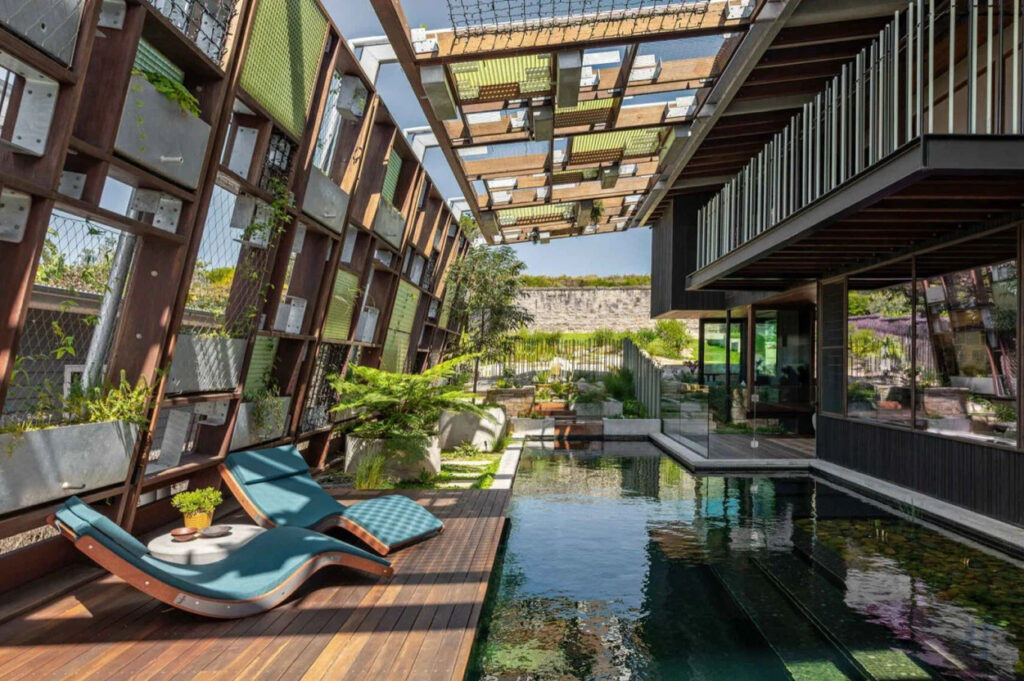
The Holocene House Concept represents a bold approach to contemporary residential design. Instead of treating architecture and landscape as separate elements, this concept blends water, geometry, and structure into one cohesive living environment. The result is a home that feels both modern and deeply connected to nature.
In a time when sustainable living and climate-responsive architecture are becoming more important than ever, the Holocene House Concept offers a fresh perspective. It challenges traditional residential layouts and explores how geometry and water can shape not just a building, but an experience.
What Is the Holocene House Concept?
At its core, the Holocene House Concept is about integration. The design focuses on merging architectural geometry with natural elements, particularly water. Instead of placing a pool or pond as an afterthought, water becomes a structural and visual centerpiece.
Sharp lines, layered frames, and modular panels create a geometric identity. At the same time, reflective water surfaces soften the structure, creating balance between rigid forms and fluid movement.
This interplay between structure and nature defines the Holocene House Concept. It is not just a home; it is a spatial dialogue between human design and environmental context.
Water as an Architectural Element
Water plays a central role in the Holocene House Concept. Rather than simply serving as decoration, it functions as a cooling system, reflective surface, and emotional anchor.
Pools and water channels are positioned strategically to:
-
Reflect light into interior spaces
-
Reduce surrounding temperatures
-
Create visual continuity
-
Enhance sensory experience
The reflective quality of water amplifies architectural geometry. Steel frames, vertical panels, and layered structures appear mirrored on the surface, doubling their impact.
Beyond aesthetics, water integration contributes to passive climate control. In warmer environments, surrounding water can help regulate temperature naturally.
The Power of Geometry
Geometry is another defining feature of the Holocene House Concept. Clean lines, rectangular grids, and modular frames shape the building’s identity.
The structure often features:
-
Repeating vertical slats
-
Layered metal or timber panels
-
Open grid systems
-
Cantilevered roof elements
These geometric patterns create depth and texture. Light filters through panels, casting shifting shadows throughout the day. The design becomes dynamic, constantly changing with the sun’s movement.
This architectural language feels modern but grounded. It avoids unnecessary ornamentation and instead relies on proportion and repetition to create impact.
Indoor-Outdoor Flow
One of the strongest aspects of the Holocene House Concept is its seamless indoor-outdoor connection. Large glass panels, open courtyards, and transitional decks blur the boundary between interior and exterior spaces.
The presence of water further enhances this connection. Instead of stepping out into a standard backyard, residents move into a carefully designed landscape that feels like an extension of the living room.
This fluid transition supports a more relaxed lifestyle. Natural light, fresh air, and reflective surfaces combine to create a calm and open atmosphere.
Sustainability and Climate Responsiveness
The Holocene House Concept aligns with sustainable design principles. By integrating water and strategic shading systems, the structure reduces reliance on artificial cooling.
Vertical screens and geometric panels act as sun filters. They allow light to pass through while minimizing heat gain. Combined with water features, this creates a microclimate around the home.
Sustainable materials often play a role as well. Steel, reclaimed timber, and eco-conscious finishes help reduce environmental impact while maintaining a modern aesthetic.
In a world facing climate challenges, homes designed with environmental responsiveness in mind are becoming increasingly relevant.
A Contemporary Interpretation of Shelter
The Holocene House Concept reimagines what shelter means in the modern era. Traditional homes often focus on enclosure and separation from nature. This concept, however, embraces openness.
Instead of walls that block the environment, it uses layered systems that filter and frame it. The geometry provides structure, while water introduces fluidity.
This combination creates a sense of protection without isolation. Residents remain connected to their surroundings while enjoying privacy and comfort.
Emotional and Sensory Experience
Architecture is not only about structure — it’s also about feeling. The Holocene House Concept carefully considers how space influences emotion.
Water introduces sound and reflection. Gentle ripples create subtle movement. Sunlight bouncing off the surface brings warmth and brightness into living areas.
The geometric framework adds rhythm and pattern, which can feel grounding and balanced. Together, these elements produce a calming environment that feels intentional and thoughtfully designed.
This sensory awareness sets the Holocene House Concept apart from conventional residential projects.
Adaptable Design Principles
Another strength of the Holocene House Concept is adaptability. The core principles — geometry, water integration, and environmental responsiveness — can be applied in various climates and settings.
Whether placed in a coastal region, urban setting, or rural landscape, the concept can evolve to suit local conditions. Water features may vary in scale, and geometric panels can be adjusted based on sun orientation and privacy needs.
This flexibility ensures that the Holocene House Concept is not just a single design, but a framework for future architecture.
A Vision for Future Living
As urban populations grow and environmental awareness increases, architecture must evolve. The Holocene House Concept suggests that future homes will prioritize harmony between built form and natural systems.
Instead of treating sustainability as an add-on, it becomes part of the architectural DNA. Instead of separating water and structure, they become integrated components of a unified design.
This forward-thinking approach reflects a broader movement in contemporary architecture — one that values balance, efficiency, and experiential quality.
Final Thoughts
The Holocene House Concept demonstrates how powerful architecture can be when geometry and water work together. Through reflective surfaces, structured frameworks, and climate-responsive strategies, it creates a living space that feels both modern and organic.
More than just a visual statement, the Holocene House Concept represents a shift in how we think about residential design. It encourages integration over separation, sustainability over excess, and experience over decoration.
As architectural innovation continues to evolve, concepts like this point toward a future where homes are not just places to live, but environments that actively engage with nature.