
SpaceX’s New Priority Is a Self-Growing City on the Moon
For years, space exploration has been framed as a race: who can get there first, who can land, who can plant a flag. But now, the conversation is shifting. Instead of just visiting space, the real challenge is learning how to live there.
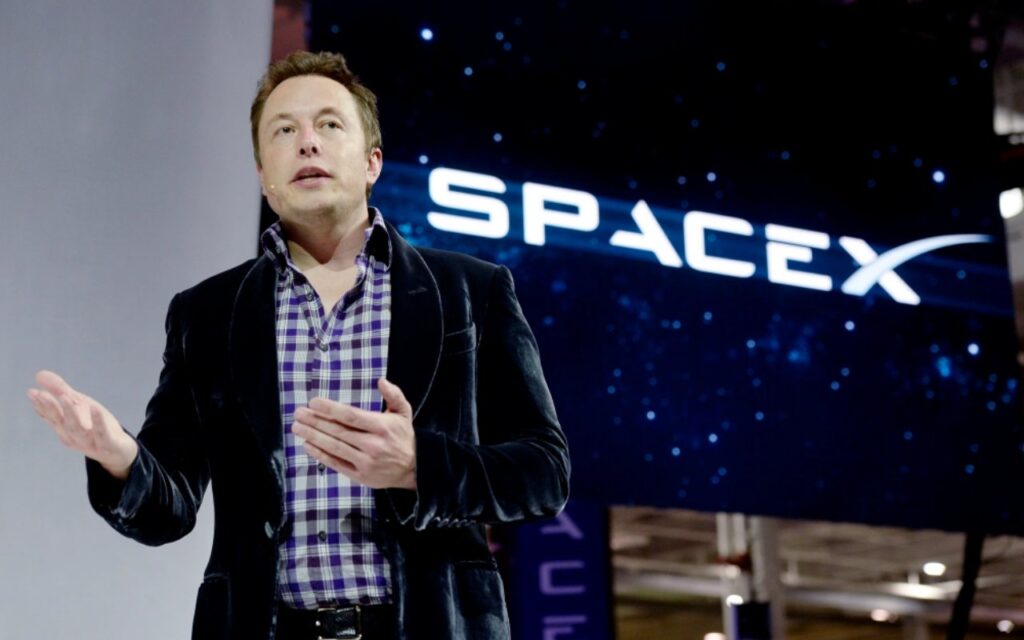
That’s where SpaceX comes in. The company’s new long-term priority goes far beyond rockets and missions. The goal is bold, almost sci-fi level: building a self-growing city on the Moon. Not a temporary base. Not a research outpost. A city that can expand, adapt, and eventually sustain itself.
So what does that actually mean and why does it matter?
From Missions to Permanence
Traditional space missions are designed around short-term goals. Astronauts go up, conduct experiments, and come back. Even the International Space Station, as impressive as it is, depends heavily on constant resupply from Earth.
SpaceX wants to flip that model.
Instead of asking “How do we survive for a few weeks?”, the question becomes:
“How do we create a system that keeps growing without Earth doing all the work?”
A self-growing city isn’t about building everything at once. It’s about creating a foundation that can replicate, expand, and evolve using local resources and autonomous systems.
Why the Moon Comes First
If Mars is the long-term dream, the Moon is the training ground.
The Moon is close enough to Earth to allow faster communication, emergency returns, and iterative testing. It’s also rich in materials like regolith, which can be processed into building components, shielding, and even fuel.
Unlike Mars, the Moon allows SpaceX to test:
- Off-world construction methods
- Autonomous robotics and AI-driven expansion
- Human survival systems under extreme conditions
In short, the Moon is where humanity learns how to stop being visitors and start becoming residents.
What “Self-Growing” Really Means
A self-growing city isn’t built the way cities on Earth are. There’s no massive workforce, no endless supply chain, and no quick fixes.
Instead, the growth happens through systems, not manual labor.
Autonomous Construction
Robotic systems would handle the earliest stages: building habitats, tunnels, and infrastructure using lunar materials. These machines wouldn’t just follow instructions they’d adapt to conditions in real time.
Local Resource Utilization
Shipping materials from Earth is expensive and inefficient. A lunar city must rely on what’s already there: dust, rock, ice, and solar energy. The more the city grows, the less it depends on Earth.
Modular Expansion
Think of the city as a living organism. Each module habitats, power units, research labs can connect, replicate, or evolve as needs change. Growth isn’t linear; it’s adaptive.
Designing a City Without Earth’s Shortcuts
Cities on Earth evolved with gravity, atmosphere, and natural ecosystems working in our favor. The Moon offers none of that.
That forces designers and engineers to rethink everything:
- Architecture must protect against radiation and temperature extremes
- Transportation systems must work in low gravity
- Daily life must be optimized for efficiency and safety
Ironically, these limitations may lead to better design thinking. When every resource is scarce, waste disappears. Every system has a purpose.
A New Kind of Human Lifestyle
Living on the Moon won’t feel like life on Earth and that’s the point.
A lunar city would require:
- Highly structured routines
- Strong community interdependence
- Mental resilience and adaptability
There’s no room for excess. Every action, from breathing to eating to moving, is part of a larger system. In many ways, it’s the opposite of modern consumer culture.
And that’s exactly why it’s fascinating.
Why This Isn’t Just About Space
At first glance, a self-growing city on the Moon sounds like a billionaire’s fantasy project. But the implications go far beyond space exploration.
Technologies developed for lunar living could reshape life on Earth:
- Sustainable architecture
- Closed-loop energy systems
- Advanced recycling and water management
- Smarter urban planning
When you design for the harshest environment imaginable, the solutions tend to be surprisingly useful back home.
The Cultural Impact of a Lunar City
If a permanent city exists beyond Earth, it changes how humanity sees itself.
Borders become irrelevant. National identities blur. The Moon doesn’t belong to any country it belongs to everyone and no one at the same time.
A self-growing city on the Moon would be:
- A symbol of collective human ambition
- A test of global cooperation
- A reminder that survival depends on shared systems
It’s not just an engineering challenge. It’s a cultural one.
Challenges That Can’t Be Ignored
Of course, this vision isn’t without massive obstacles.
Radiation exposure, long-term health effects, psychological isolation, and ethical questions around space ownership are all unresolved. A city can’t grow if the people inside it can’t thrive.
SpaceX isn’t pretending these problems don’t exist. The idea is to confront them early, through real-world experimentation instead of endless theory.
From Science Fiction to Strategy
What makes SpaceX’s lunar vision different is that it’s not framed as a distant fantasy. It’s treated as a strategic step.
The Moon becomes a prototype a place where humanity learns how to design life beyond Earth. Not perfectly. Not instantly. But progressively.
A self-growing city isn’t built overnight. It starts small, fails often, and improves continuously.
Rethinking the Future of Humanity
At its core, this idea forces a bigger question:
Is humanity meant to stay on one planet forever?
SpaceX’s answer seems clear. Expansion isn’t about escaping Earth it’s about ensuring long-term survival and growth. A lunar city is less about conquest and more about continuity.
If successful, it would mark a turning point: the moment humanity stopped being a single-planet species.
And once that door opens, there’s no closing it again.
Final Thought
A self-growing city on the Moon isn’t just a technical milestone. It’s a mindset shift. From short-term missions to long-term living. From extraction to sustainability. From isolation to shared responsibility.
Whether this vision succeeds or not, one thing is certain: the way we imagine the future of space and ourselves is already changing.