
SpaceX Acquires xAI: A New Era for AI and Space Tech
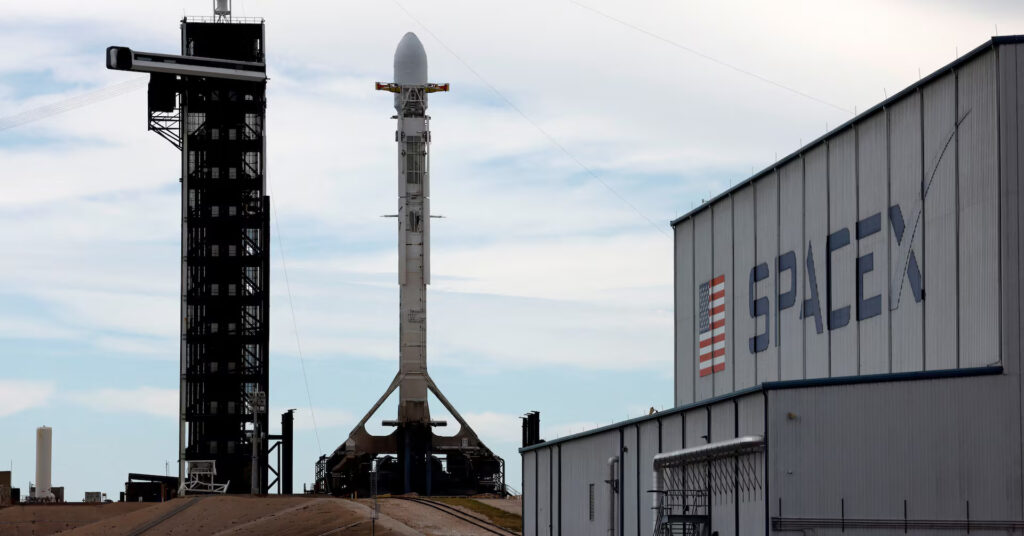
The tech world doesn’t stay quiet for long, especially when SpaceX and xAI are mentioned in the same sentence. Recently, reports and strong speculation have surfaced around a major move: SpaceX acquiring xAI.
While both companies have been closely linked through Elon Musk, this potential acquisition signals something much bigger than simple corporate restructuring. It points toward a future where artificial intelligence and space exploration are no longer separate ambitions, but one unified mission.
So what does it really mean if SpaceX acquires xAI? And why does this matter beyond Musk’s business empire?
A Strategic Merger, Not a Random One
At first glance, SpaceX and xAI might look like they live in different worlds. One builds rockets and launches satellites. The other develops AI systems designed to understand reality more deeply. But when you zoom out, the connection becomes obvious.
SpaceX runs one of the most complex engineering operations on Earth. From reusable rockets to global satellite networks like Starlink, everything depends on massive data processing, real-time decision-making, and extreme precision. AI is not optional in that environment—it’s essential.
By bringing xAI into the SpaceX ecosystem, the company could gain tighter control over advanced AI models that are purpose-built for space missions, automation, and large-scale systems management.
Why SpaceX Would Want xAI
Space exploration today isn’t just about hardware. It’s about intelligence.
Rocket launches generate insane amounts of data. Satellites need to make decisions autonomously. Deep-space missions can’t rely on human input alone due to time delays. This is exactly where AI becomes critical.
xAI has been positioning itself as a company focused on building AI that understands the universe, not just chatbots or productivity tools. If SpaceX acquires xAI, it could mean:
-
Smarter autonomous flight systems
-
Better prediction models for launch and landing
-
AI-assisted spacecraft diagnostics
-
Faster problem detection during missions
-
Improved satellite traffic and collision avoidance
In short, AI becomes the brain, while SpaceX remains the body.
What This Means for xAI
For xAI, being acquired by SpaceX would instantly give the company something most AI startups can only dream of: real-world, extreme-scale use cases.
Instead of training models mainly on text and simulations, xAI could test its systems in real environments—space, orbit, and planetary missions. That kind of data is rare, expensive, and incredibly valuable.
It would also push xAI away from being “just another AI company” and toward becoming a specialized intelligence provider for aerospace, defense, and planetary science.
This could clearly differentiate xAI from competitors like OpenAI, Google DeepMind, or Anthropic.
Elon Musk’s Bigger Picture
This potential acquisition also fits neatly into Elon Musk’s long-term vision.
Musk has always talked about humanity becoming a multi-planetary species. But getting to Mars isn’t just about rockets. It’s about systems that can think, adapt, and survive in environments humans can’t constantly control.
AI plays a massive role in that vision.
By aligning SpaceX and xAI under one roof, Musk could accelerate the development of AI systems designed specifically for survival, exploration, and decision-making beyond Earth.
It’s less about profit, and more about control and integration.
Impact on the AI Industry
If SpaceX acquires xAI, the ripple effects across the AI industry would be significant.
Most major AI companies are focused on consumer products, enterprise tools, or creative applications. SpaceX would be doing something very different: applying AI to physical reality at the edge of human capability.
That could push AI development in a more applied, mission-critical direction. Instead of asking, “Can AI write better text?” the question becomes, “Can AI safely land a spacecraft on Mars?”
This shift could inspire a new category of AI companies focused on robotics, aerospace, climate modeling, and planetary systems.
What About Regulation and Ethics?
Any move involving AI and space tech will raise questions about regulation, safety, and ethics.
AI-controlled systems in orbit or on other planets aren’t just software bugs waiting to happen—they can become billion-dollar mistakes. That means SpaceX would need extremely strict testing, transparency, and fail-safe mechanisms.
There’s also the geopolitical angle. Advanced AI combined with satellite networks could trigger concerns around surveillance, defense, and global power balance.
So while the technology is exciting, it will definitely attract attention from regulators worldwide.
A New Era of Tech Convergence
What makes this potential acquisition so interesting is not just who is buying whom, but what it represents.
We’re entering an era where industries don’t stay in their lanes. Space, AI, robotics, and data science are merging into one ecosystem. SpaceX acquiring xAI would be a strong signal that the future belongs to companies that can integrate intelligence directly into physical systems.
No more silos. No more standalone tech.
Final Thoughts
Whether already finalized or still unfolding, the idea of SpaceX acquiring xAI feels less like a surprise and more like an inevitable step.
It aligns with Elon Musk’s vision, strengthens SpaceX’s technological edge, and gives xAI a mission that goes far beyond typical AI development. If this move fully materializes, it could redefine how AI is built, tested, and used—not just on Earth, but beyond it.
One thing is clear: the line between artificial intelligence and space exploration is getting thinner. And the future, as always with Musk involved, is going to be loud, ambitious, and controversial.