
Tesla Halts Model S and Model X Production: What It Means for the EV Market
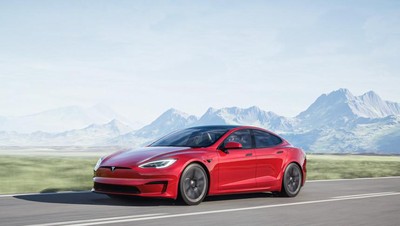
For years, the Tesla Model S and Model X have been more than just electric cars. They were symbols. The Model S proved that EVs could be fast, luxurious, and desirable. The Model X, with its dramatic falcon-wing doors, showed that electric SUVs didn’t have to be boring. So when news broke that Tesla is halting production of both models, it instantly raised eyebrows across the automotive world.
Is this the quiet end of Tesla’s premium lineup? Or is it simply another calculated move in Elon Musk’s ever-unpredictable strategy?
A Brief Look Back: Why Model S and X Mattered
When the Model S launched in 2012, it completely changed the conversation around electric vehicles. Before Tesla, EVs were often seen as slow, impractical, and niche. The Model S flipped that image overnight. It was sleek, fast, and could outperform many gasoline sports sedans.
The Model X followed a few years later, targeting the luxury SUV market. It wasn’t perfect, but it was bold. The falcon-wing doors became instantly recognizable, and the vehicle positioned Tesla as a brand willing to take risks where traditional automakers played safe.
For a long time, these two models represented Tesla’s ambition to compete directly with established luxury brands like Mercedes-Benz, BMW, and Audi.
Why Tesla Is Stopping Production (At Least for Now)
Tesla hasn’t framed this move as a dramatic “end” to Model S and X. Instead, it’s being described as a production pause or halt. But even a pause says a lot.
First, demand for Model S and X has been relatively low compared to Tesla’s mass-market vehicles. The Model 3 and Model Y dominate Tesla’s sales numbers globally. They’re cheaper, easier to manufacture, and appeal to a much wider audience.
From a business perspective, it makes sense. Tesla is no longer a startup trying to prove electric cars can work. It’s now a scale-focused manufacturer under pressure to optimize costs, margins, and factory efficiency.
Second, the Model S and X are complex vehicles. They rely on older platforms, require more manual assembly, and don’t benefit as much from Tesla’s latest manufacturing efficiencies. In a world where Tesla is aggressively pushing simplified production and higher output, these models start to look like outliers.
The Bigger Strategy: Focus on Volume, Not Prestige
This production halt fits into a broader shift in Tesla’s priorities. Over the last few years, Tesla has made it clear that volume matters more than prestige.
The company is heavily invested in:
-
Scaling Model Y production globally
-
Developing a next-generation, lower-cost vehicle
-
Expanding energy products like batteries and solar
-
Advancing Full Self-Driving and AI systems
In that context, the Model S and X don’t really move the needle anymore. They’re expensive to build, sell in relatively small numbers, and don’t significantly contribute to Tesla’s long-term growth goals.
Instead of chasing the luxury segment, Tesla seems more interested in becoming the default EV brand for the masses.
What This Means for the Luxury EV Market
Tesla stepping back from its flagship models opens up space for competitors. Brands like Mercedes-Benz, Porsche, BMW, and even newer EV-only companies are aggressively targeting the high-end electric market.
Vehicles like the Porsche Taycan, Mercedes EQS, and BMW i7 are designed to capture exactly the audience that once gravitated toward the Model S. Tesla’s absence, even temporarily, gives these brands a chance to strengthen their position.
That said, Tesla still holds an advantage in software, charging infrastructure, and brand recognition. Even without Model S and X production, Tesla remains deeply influential.
How Fans and Owners Are Reacting
Unsurprisingly, reactions have been mixed.
Some Tesla fans see this as a smart move. They argue that Model S and X already served their purpose. They broke barriers, built Tesla’s reputation, and paved the way for more accessible EVs. From that perspective, pausing production feels like a natural evolution.
Others are disappointed. For long-time Tesla supporters, Model S especially carries emotional weight. It represents the moment Tesla proved doubters wrong. Seeing it fade into the background feels like losing a piece of the company’s identity.
There’s also concern among potential buyers. A paused production line can raise questions about long-term support, resale value, and future updates.
Is This Really the End?
Probably not. Tesla has a history of doing things in phases. Halting production now doesn’t mean Model S and X are gone forever.
There’s a real possibility that Tesla is clearing the deck for a redesign or a new approach. If these models return, they may come back as:
-
Limited-production halo vehicles
-
Technology showcases rather than volume sellers
-
Fully redesigned platforms aligned with Tesla’s latest manufacturing philosophy
In other words, Model S and X could return, but not in the same form we’ve known for years.
A Symbolic Shift for Tesla
More than anything, this decision feels symbolic. Tesla is no longer the scrappy disruptor trying to prove electric cars can beat gas vehicles. It already won that argument.
Now, Tesla behaves more like a large-scale tech manufacturer than a traditional luxury automaker. Efficiency, scale, and ecosystem matter more than premium finishes or experimental design features.
Stopping production of Model S and X signals that Tesla is closing one chapter and fully committing to the next.
Final Thoughts
Tesla halting production of Model S and Model X isn’t just a manufacturing decision. It’s a statement about where the company is headed.
The cars that once defined Tesla’s identity are stepping aside to make room for mass adoption, simplified production, and long-term scalability. For some, that’s exciting. For others, it’s a little bittersweet.
Either way, one thing is clear: Tesla isn’t slowing down. It’s just changing gears.