
India and the EU’s “Mother of All Deals”: A Trade Agreement That Could Change the Game
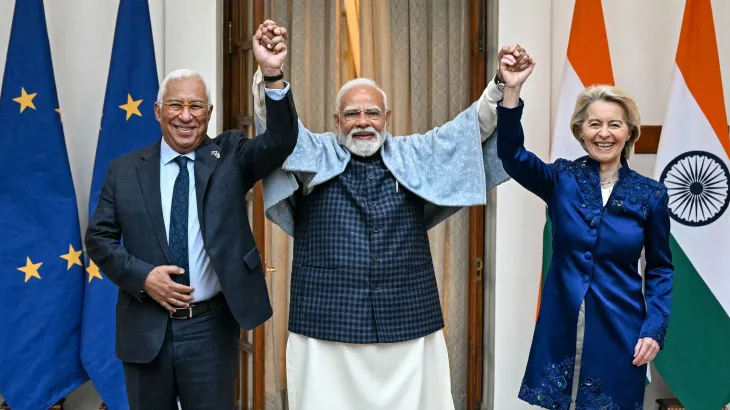
When India and the European Union finally shook hands on what many are calling the “Mother of All Deals,” it wasn’t just another trade agreement added to the global paperwork pile. This was a statement. A big one. After years of negotiations, pauses, and political recalculations, the deal signals something much deeper: a strategic shift in how both sides see their economic future.
For India, this agreement is about stepping confidently into its role as a global manufacturing and innovation hub. For the European Union, it’s about securing reliable partners in a world where supply chains are no longer guaranteed and geopolitical tensions are always just one headline away.
So why is this deal such a big deal? And why now?
A Deal Years in the Making
Negotiations between India and the EU didn’t start yesterday. In fact, talks around a comprehensive free trade agreement have been on and off for more than a decade. Different governments, shifting priorities, disagreements over tariffs, labor standards, data protection, and environmental rules all of these slowed things down.
But the world changed.
The pandemic exposed how fragile global supply chains really are. Trade tensions between major powers pushed countries to rethink over-dependence on single markets. Energy crises, wars, and inflation added even more pressure. In that context, both India and the EU realized that waiting wasn’t an option anymore.
Calling the agreement the “Mother of All Deals” isn’t just political flair. It reflects the scale of ambition: wide market access, reduced tariffs, cooperation on technology, sustainability commitments, and long-term economic alignment.
What’s Actually Inside the Agreement?
At its core, the deal aims to lower barriers and increase trust.
On the trade side, this means reduced or eliminated tariffs on a wide range of goods automobiles, pharmaceuticals, textiles, machinery, and agricultural products. For European companies, India’s massive consumer market suddenly becomes more accessible. For Indian exporters, Europe offers high-value markets with stable demand.
But this isn’t only about goods.
Services play a huge role too. IT services, digital platforms, engineering, finance, and professional mobility are all part of the conversation. India’s strength in tech and skilled labor pairs naturally with Europe’s demand for innovation and digital transformation.
There’s also a strong focus on investment protection, intellectual property, and regulatory transparency key issues for businesses deciding where to put long-term capital.
Why This Deal Matters for India
For India, the agreement is about momentum.
The country has been pushing hard to attract global manufacturers under initiatives like “Make in India.” This deal reinforces that narrative. Easier access to European markets makes India a more attractive base for production not just for domestic consumption, but for global exports.
It also nudges Indian industries to move up the value chain. Competing in the EU market means meeting higher standards, whether in product quality, sustainability, or compliance. That pressure can be uncomfortable, but it often leads to stronger, more globally competitive companies.
On a strategic level, the deal diversifies India’s trade partnerships. Instead of leaning too heavily on one or two major economies, India spreads its risk and increases its leverage.
Why Europe Is All In
From the EU’s perspective, this agreement is just as strategic.
Europe needs reliable partners. Energy security, access to raw materials, resilient supply chains, and growing consumer markets are top priorities. India checks many of those boxes.
European companies also see long-term opportunity in India’s demographics. A young population, rapid urbanization, and rising middle class mean demand for everything from cars and clean energy to healthcare and digital services.
Politically, the deal also reinforces Europe’s broader Indo-Pacific strategy strengthening ties with democratic partners and reducing vulnerabilities in an increasingly fragmented global economy.
The Sustainability Question
One of the most debated aspects of the deal is sustainability.
The EU has been clear: trade agreements today can’t ignore climate goals, labor rights, and environmental protection. India, meanwhile, has emphasized the need for fairness, flexibility, and recognition of different development stages.
The compromise lies in cooperation rather than punishment. Instead of heavy-handed sanctions, the agreement focuses on shared goals renewable energy, clean technology, sustainable manufacturing, and responsible sourcing.
If implemented well, this could actually accelerate green innovation on both sides, rather than turning sustainability into a trade weapon.
Challenges Ahead (Because There Always Are)
Calling it the “Mother of All Deals” doesn’t mean everything will be smooth sailing.
Implementation is the real test. Aligning regulations across vastly different systems is never easy. Small businesses may struggle to adapt. Political changes on either side could slow progress. And critics will continue to question whether the benefits are distributed fairly.
There’s also the human side: workers worried about competition, farmers concerned about imports, and activists skeptical of corporate-friendly agreements. These concerns aren’t trivial and how governments respond to them will shape public support for the deal.
A Signal to the World
Beyond economics, this agreement sends a message.
It says that large, diverse democracies can still find common ground in a fragmented world. It shows that trade isn’t just about numbers, but about trust, long-term thinking, and shared interests.
In an era where many countries are turning inward, India and the EU are choosing engagement on their own terms.
Final Thoughts
The India–EU “Mother of All Deals” isn’t just another free trade agreement. It’s a strategic pivot. A bet on cooperation over isolation. A recognition that the future of global trade will be shaped by partnerships that balance growth, resilience, and responsibility.
Whether it lives up to the hype depends on what happens next. But one thing is clear: this deal has already reshaped the conversation and the ripple effects will be felt far beyond Brussels and New Delhi.