
From Clawdbot to Moltbot: The Quiet Evolution of a Personal AI Assistant
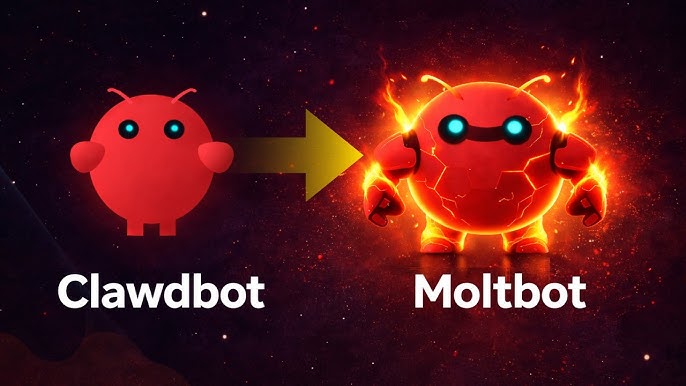
Not every tech product makes noise when it changes. Some don’t announce a big rebrand, don’t drop flashy launch videos, and don’t try to dominate headlines. Instead, they evolve quietly shaping themselves around how people actually use them. That’s exactly what happened with Clawdbot, now known as Moltbot.
At first glance, the name change might seem like a small detail. But behind it sits a deeper shift in how personal AI assistants are being imagined not as tools that shout instructions at you, but as systems that adapt, learn, and grow alongside you.
What Clawdbot Was Built to Be
When Clawdbot first appeared, it positioned itself as a personal AI assistant designed to help users think, organize, and move faster. Not just task management, not just automation but something more flexible. Clawdbot wasn’t trying to replace productivity apps. It was trying to sit between them.
Instead of forcing users into rigid workflows, it focused on:
- Understanding context
- Responding conversationally
- Helping users make decisions, not just lists
It felt less like software and more like a digital thinking partner.
Why Personal AI Assistants Are Different
To understand Clawdbot and later Moltbot you have to understand why personal AI assistants matter right now. Most software is built around features. Personal AI assistants are built around behavior.
They don’t ask:
“What buttons should we add?”
They ask:
“How do people actually think, forget, plan, and change their minds?”
That’s a big shift.
People don’t work in straight lines. They jump between ideas, switch priorities, procrastinate, panic, regroup, and start again. Traditional productivity tools struggle with that. AI assistants, on the other hand, can adapt in real time. That’s the space Clawdbot tried to occupy.
The Rebrand: Why Moltbot?
The transition from Clawdbot to Moltbot wasn’t just cosmetic. The word molt literally means to shed an old layer to grow a new one. That metaphor fits surprisingly well for an AI assistant designed to evolve with its user.
Moltbot signals a shift toward:
- Growth over control
- Adaptation over instruction
- Learning over static rules
Instead of being a “bot that helps,” Moltbot aims to become a system that changes as you change. And that’s a subtle but powerful idea.
Moltbot as a Thinking Companion
What sets Moltbot apart from many AI assistants is its positioning as a personal companion for thinking, not just doing.
Rather than focusing only on:
- Reminders
- Tasks
- Schedules
Moltbot leans into:
- Brain dumps
- Idea exploration
- Pattern recognition
- Personal workflows
You can talk to it messily. You don’t need perfect inputs. The system is designed to handle ambiguity, half-formed ideas, and evolving goals. In other words, it works more like your internal monologue just more organized.
Not Another “Smart Tool”
There’s a growing fatigue around “smart” tools that promise everything and deliver complexity instead. Moltbot feels like a response to that. Instead of adding more dashboards, more metrics, and more pressure, it tries to reduce cognitive load.
The value isn’t in automation alone. It’s in:
- Remembering context for you
- Connecting ideas over time
- Helping you reflect, not just execute
That makes it especially appealing for:
- Creatives
- Founders
- Writers
- Researchers
- People who think in systems, not checklists
Privacy, Trust, and Personal Data
Any personal AI assistant lives or dies by trust. Because Moltbot deals with thoughts, plans, unfinished ideas, and personal reflections, privacy becomes central not optional. Users don’t just store data in systems like this. They store parts of themselves.
That’s why modern personal AI tools are under pressure to:
- Be transparent about data usage
- Avoid unnecessary data sharing
- Respect personal boundaries
Moltbot’s positioning suggests an awareness of this tension: an assistant that learns from you without trying to exploit you. In a time when AI often feels extractive, that matters.
Why This Kind of AI Feels Inevitable
The shift from Clawdbot to Moltbot reflects a broader trend in AI design.
We’re moving away from:
- Command-based tools
- Rigid productivity systems
- One-size-fits-all workflows
And toward:
- Adaptive systems
- Context-aware assistants
- AI that grows with the user
People don’t want software that tells them what to do. They want systems that understand how they work. Moltbot fits neatly into that future.
The Quiet Power of Not Overpromising
What’s interesting about Moltbot is what it doesn’t do.
It doesn’t position itself as:
- A life optimizer
- A hustle machine
- A replacement for human judgment
Instead, it stays grounded. Supportive. Subtle. That restraint might be its biggest strength. In a market full of loud AI claims, Moltbot feels like a product that knows its role: to assist, not dominate.
Final Thoughts
The evolution from Clawdbot to Moltbot isn’t just a rebrand. It’s a signal.
>A signal that personal AI assistants are growing up.
>A signal that users want tools that adapt, not dictate.
>A signal that the future of AI may be quieter but more profound.
Moltbot represents a new kind of relationship between humans and machines. One built on learning, shedding old layers, and growing together. And in a world overloaded with tools, that kind of simplicity feels refreshing.