
Ontario’s New Research Centre: A “Lantern” of Innovation by Montgomery Sisam
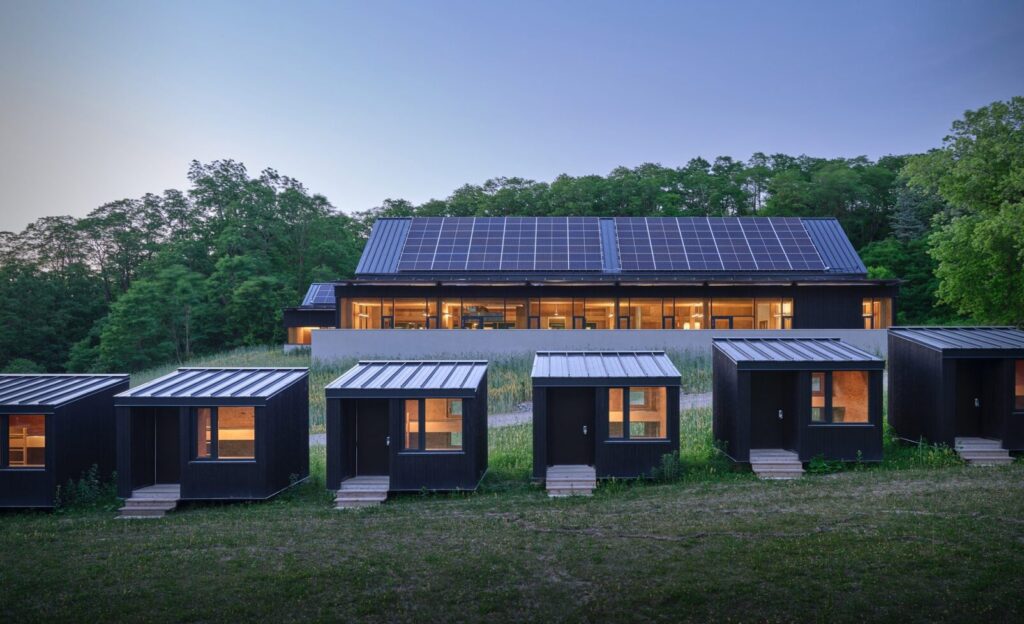
A striking new building is rising in Canada that blends architecture, science, and collaboration in one bold design. Designed by Montgomery Sisam Architects, Ontario’s new research centre has quickly caught attention for its unique architectural concept—described by its designers as a glowing “lantern of innovation.”
Located in Ontario, the building is meant to be much more than a typical research facility. Instead of isolating laboratories and researchers behind closed doors, the project focuses on transparency, collaboration, and community connection.
With its luminous facade, open interior layout, and cutting-edge facilities, the research centre aims to become a landmark for innovation while also redefining how research environments can be designed.
A Vision for Collaborative Research
Modern scientific research rarely happens in isolation anymore. Today, breakthroughs often come from collaboration between scientists, engineers, designers, and entrepreneurs.
The team at Montgomery Sisam Architects embraced this idea when designing the new research centre. Their goal was to create a space where people from different disciplines could interact naturally, sparking new ideas and discoveries.
Instead of traditional lab buildings that prioritize separation and security, the architecture here encourages openness. Shared spaces, visible laboratories, and flexible meeting areas allow researchers to see each other’s work and collaborate more easily.
The concept of the building as a “lantern” symbolizes this openness. Just like a lantern spreads light outward, the research centre is meant to radiate knowledge, creativity, and innovation into the surrounding community.
The Lantern-Inspired Design
One of the most distinctive features of the project is its glowing exterior. During the day, the building appears light and transparent thanks to its glass-heavy facade. At night, interior lighting transforms the structure into a soft, glowing beacon.
This visual effect is where the “lantern” metaphor truly comes to life.
The architects designed the building envelope to filter light carefully. Layers of glass and structural elements create depth and texture while controlling sunlight and reducing glare inside the laboratories.
The result is a building that feels bright and open without sacrificing comfort or energy efficiency.
From a distance, the research centre stands out as a modern architectural landmark within the Ontario landscape.
Architecture That Supports Innovation
Research facilities have very specific technical requirements. Laboratories must support advanced equipment, controlled environments, and flexible layouts that can adapt as technologies evolve.
The new research centre addresses these needs with a highly adaptable design strategy.
Key features include:
- Flexible laboratory modules that can be reconfigured as research needs change
- Shared collaboration zones between lab areas
- Advanced ventilation and environmental systems for scientific work
- Integrated digital infrastructure for data-heavy research
By designing labs that can evolve over time, the building avoids becoming outdated as scientific fields continue to advance.
This flexibility is increasingly important as research institutions deal with rapidly changing technologies.
Connecting Researchers and the Public
Another key goal of the project is to make research more visible and accessible to the public.
Traditional research buildings often feel closed off from the surrounding community. In contrast, the Ontario research centre includes public-facing spaces that invite visitors inside.
These spaces may include:
- Educational exhibition areas
- Public lecture rooms
- Collaboration zones for startups and industry partners
- Informal meeting spaces for academic discussions
By bringing research closer to the public, the building helps create a stronger relationship between scientists and society.
This approach reflects a broader trend in modern architecture: designing institutions that engage communities rather than isolate them.
Sustainable Design at the Core
Sustainability also plays a major role in the project’s design.
Research facilities are known for high energy consumption due to their intensive ventilation systems and specialized equipment. Because of this, architects often face the challenge of balancing performance with environmental responsibility.
The design by Montgomery Sisam Architects integrates several strategies to reduce the building’s environmental impact.
Some of these include:
- High-performance glass systems to reduce heat loss
- Energy-efficient mechanical systems
- Optimized daylighting to reduce artificial lighting needs
- Durable materials designed for long-term performance
Together, these features help ensure the building operates efficiently while supporting complex scientific research.
A Hub for Future Discoveries
Beyond its architectural qualities, the research centre is expected to play a key role in advancing scientific innovation in Canada.
Facilities like this often attract top researchers, startups, and academic partnerships. By providing modern infrastructure and collaborative environments, the building can become a hub where new ideas turn into real-world breakthroughs.
Fields that may benefit from the centre include:
- Biomedical research
- Environmental science
- Advanced materials
- Data science and technology innovation
The flexible design allows the building to host a wide range of disciplines, making it a long-term investment in the region’s research ecosystem.
Architecture as a Symbol of Knowledge
The lantern metaphor goes beyond the building’s appearance. Symbolically, it represents the role of research institutions in society.
For centuries, knowledge has been associated with light—illuminating the unknown and guiding progress. The glowing research centre in Ontario reflects this idea in a literal and architectural way.
By creating a building that visually shines outward, the architects highlight the importance of knowledge-sharing and intellectual discovery.
It sends a clear message: innovation should not be hidden behind walls but shared with the world.
A New Landmark in Ontario
As construction progresses, the research centre is already generating excitement among architects, researchers, and local communities.
Its distinctive design, combined with its focus on collaboration and sustainability, makes it a strong example of how modern research buildings can evolve.
Rather than being purely functional, the building demonstrates that scientific infrastructure can also be inspiring and visually striking.
Once completed, the glowing structure may become one of the most recognizable modern research facilities in Ontario.
Conclusion
Ontario’s new research centre by Montgomery Sisam Architects represents a fresh approach to designing spaces for innovation. With its lantern-inspired architecture, flexible laboratories, and community-focused layout, the building reimagines what a research facility can be.
Instead of isolating scientists behind closed doors, the project encourages openness, collaboration, and public engagement.
In doing so, the glowing “lantern of innovation” stands as both a functional research hub and a powerful symbol of knowledge, creativity, and discovery in modern architecture.