
Can We Save Earth’s Orbit? New Tech for Space Junk Removal
As we sit here in 2026, the sky above us is busier than ever. While we enjoy high-speed satellite internet and pinpoint-accurate GPS, there’s a messy side effect to our space obsession. Just like the plastic in our oceans, Earth’s orbit is becoming a junkyard.
According to recent data from early 2026, there are now over 32,000 cataloged objects floating in orbit, and that’s only the stuff big enough to track. Millions of tiny fragments shards of paint, frozen coolant, and metal scraps are zooming around at 17,500 mph. At those speeds, even a tiny screw can hit a satellite with the force of a hand grenade.
The big question is: Have we reached a tipping point, or can new technology still save our “orbital highway”?
The Kessler Syndrome: Why We Need to Act Now
Space experts often talk about the Kessler Syndrome. Imagine a scenario where the orbit is so crowded that one collision creates a cloud of debris, which then hits another satellite, creating more debris. It’s a chain reaction that could eventually make space so dangerous that we can’t launch anything for decades.
We aren’t quite there yet, but with the massive growth of “mega-constellations” like Starlink (which now has nearly 10,000 active satellites in orbit), the margin for error is shrinking. The good news? 2026 is proving to be a landmark year for Active Debris Removal (ADR).
1. The “Space Claw”: ClearSpace-1 and Prelude
One of the most talked-about missions is the European Space Agency’s (ESA) partnership with the Swiss startup ClearSpace.
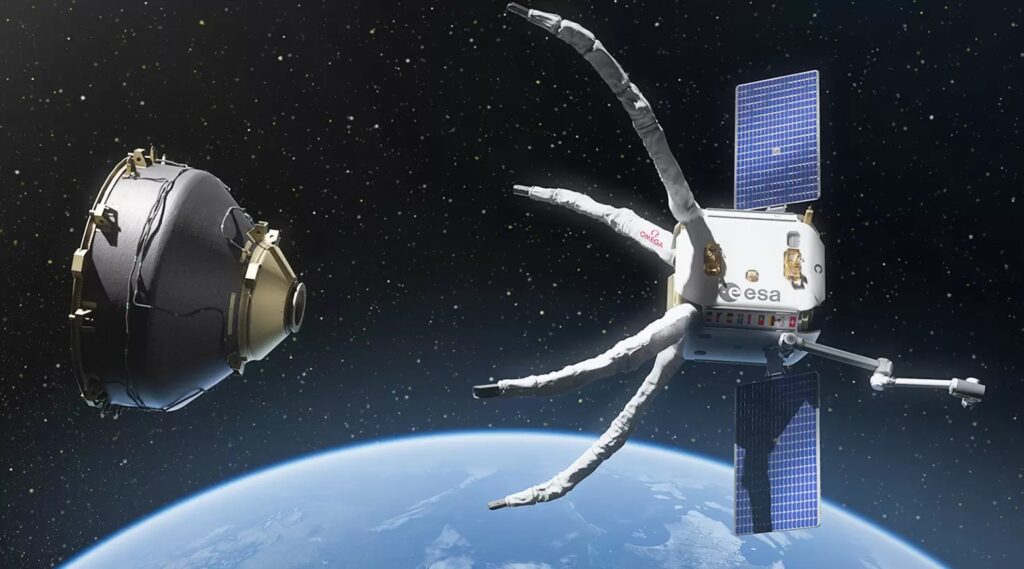
In early 2026, ESA and ClearSpace initiated the PRELUDE mission, a massive step toward making debris removal a routine service. Their flagship project, ClearSpace-1, uses a “chaser” satellite equipped with four robotic arms basically a giant claw.
-
The Goal: To grab a defunct rocket part (the PROBA-1 satellite was recently named as a new target) and drag it down into the atmosphere.
-
The Result: Both the “claw” and the junk burn up safely upon reentry, cleaning up the orbit once and for all.
2. Astroscale’s Magnetic Solution
If a claw sounds too “sci-fi,” how about magnets? Japan-based company Astroscale is leading the charge with its ELSA (End-of-Life Services by Astroscale) program.
Their tech uses a magnetic docking plate. New satellites are now being launched with these plates pre-installed, making them easy to “pick up” if they fail. For older junk, their ADRAS-J mission (which won major awards in early 2026) demonstrates how a servicer can approach and characterize uncooperative debris using advanced sensors.
3. Space Tethers and “Tow Trucks”
Researchers are also testing low-cost alternatives like the TARAZ project. This tech uses a tether (a long, strong cable) and an inflatable balloon or “sail.”
By attaching a tether to a piece of junk, the satellite uses natural air resistance even in the thin upper atmosphere to create drag. It’s like a space tow truck that slowly pulls a broken vehicle off the road until it hits the atmosphere and disintegrates.
Can We Actually Afford It?
Space junk isn’t just a “science problem”; it’s an economic one. A 2026 report from the World Economic Forum estimates that space debris could cost the global economy up to $42 billion over the next decade due to satellite damage and lost services.
Because of this, the trend is shifting from “voluntary cleanup” to binding regulations. The Zero Debris Charter, which is gaining massive traction this year, aims for a “zero debris” future by 2030. This means if you launch it, you must have a plan to bring it back down.
The Challenges Ahead
Removing junk isn’t as easy as a Sunday morning trash pickup. There are three major hurdles:
-
The “Spin” Problem: Most space junk is tumbling uncontrollably. Trying to grab a spinning 2-ton rocket stage is like trying to catch a moving fan blade without getting hurt.
-
International Law: Who owns the trash? Under current treaties, you can’t just go and grab another country’s old satellite without permission even if it’s dangerous junk.
-
The Cost: Currently, it costs millions of dollars to remove a single piece of debris. To make a real difference, we need to be removing about 50 to 60 large objects every year.
Is Earth’s Orbit Saveable?
The short answer is yes, but we’re running out of “wait and see” time.
The tech we’re seeing in 2026 from robotic claws to magnetic docking shows that we have the brains to fix the problem. The real test is whether the world’s space agencies and private companies can work together before the Kessler Syndrome takes over.
Space is the backbone of our modern world. From banking to climate monitoring, we need those satellites to stay safe. Cleaning up the orbit isn’t just about “tidying up” it’s about protecting the future of human exploration.