
2026 is the New 2016: A Look at the Changing Landscape of Culture
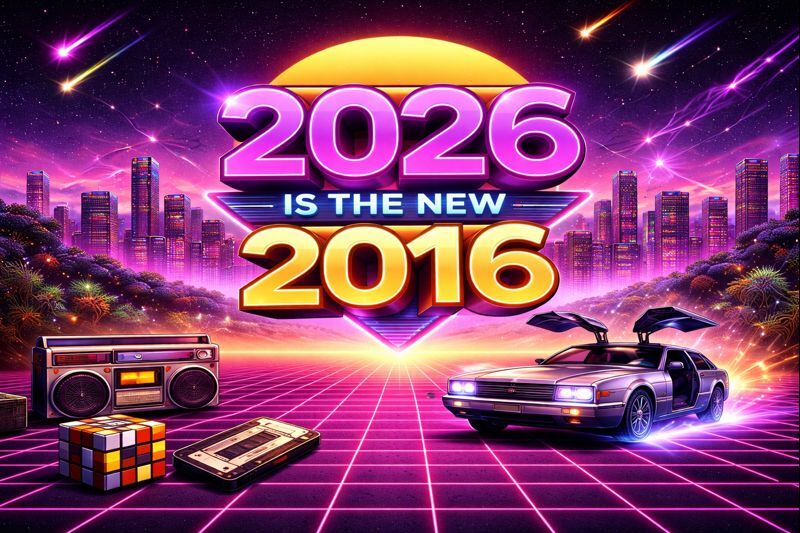
In the world of technology, trends, and societal shifts, it’s easy to feel like time flies. Yet, certain moments or years stand out as pivotal turning points. For many, 2016 felt like a time of change filled with new technologies, cultural shifts, and an overall sense of progress. But here we are, in 2026, and it’s becoming clearer that this year is shaping up to be the new 2016. Let’s dive into why 2026 is the new 2016 and explore the ways this year mirrors and reshapes the cultural and technological landscape.
The Rise of New Technology
In 2016, we witnessed the widespread use of smartphones with increasingly powerful features, virtual reality (VR) began gaining traction, and Artificial Intelligence (AI) started making its presence felt in our daily lives. Fast forward to 2026, and many of these technologies have become ubiquitous. The iPhone of 2016 looks almost nostalgic compared to the ultra-sleek, immersive devices of today. We now have smart homes that adapt to our every need, AI-powered personal assistants that understand our habits better than we do, and even the widespread integration of VR in work, entertainment, and education.
Just like 2016 marked the launch of significant innovations such as the Oculus Rift, 2026 is seeing more advanced VR technologies that take immersive experiences to new heights. From gaming to professional applications, the experiences available today would seem unimaginable to the average tech user just a decade ago. However, just as 2016 ushered in the tech boom, 2026 is moving the tech needle even further—toward more seamless, integrated, and personalized experiences.
Cultural Shifts and New Norms
When we think of 2016, we remember the rise of social movements, the boom of streaming services, and a shift in pop culture. In music, movies, and media, 2016 was a defining moment, with Beyoncé’s “Lemonade,” the rise of streaming platforms like Netflix and Spotify, and the emergence of diverse voices across the entertainment landscape. Fast forward to 2026, and these cultural shifts are now embedded in our daily lives. Streaming is no longer the future; it’s the present. Everyone’s on a content subscription of some kind, and platforms are more diverse, offering personalized content in every possible niche.
Social movements, too, have continued to evolve since 2016. While Black Lives Matter gained significant momentum in 2016, today we see an expansion of these movements into a broader discussion on global human rights, environmental activism, and the ethics of technology. The power of social media, which began to make waves in 2016, has now evolved into a fundamental tool in organizing and advocating for societal change. Activism and awareness have transformed into global conversations that impact everything from corporate responsibility to governmental policies.
The New Business Landscape
In 2016, the gig economy exploded, with companies like Uber, Lyft, and Airbnb making huge waves in the business world. Fast forward to 2026, and the business landscape has seen the rise of new and innovative business models. While the gig economy remains influential, the focus has shifted towards sustainable and socially conscious business practices. In 2026, companies are not just aiming for profitability—they are actively engaging in corporate responsibility, aligning with climate goals, and ensuring fair labor practices in a way that 2016 businesses never considered.
Technology is a big driver of this shift. In 2026, blockchain and decentralized finance (DeFi) are growing rapidly, creating new ways for people to conduct business and invest in a digital-first world. Even traditional businesses are adapting to these new technologies, transforming their operational structures to keep up with decentralized systems, secure digital transactions, and cutting-edge AI-driven business models. This shift represents a continuation of the business revolution that started in 2016 but is now evolving into something more sustainable and equitable.
The Influence of Social Media
In 2016, platforms like Instagram, Twitter, and Facebook were already shaping the way we interacted with each other and consumed information. Today, in 2026, social media has become even more ingrained in our daily routines. New platforms have emerged, and old ones have undergone radical transformations to accommodate the growing demand for more interactive, immersive experiences. TikTok, which made waves in 2016, has evolved into a central hub for both casual entertainment and cutting-edge viral trends.
In 2026, social media is not just a tool for connection but a powerful business and political platform. Influencers and content creators now have the power to influence purchasing decisions, political opinions, and global movements in ways that would have seemed impossible a decade ago. The conversation around social media is also shifting; what was once seen as a tool for fun and entertainment is now central to shaping opinions and even policy on a global scale.
Environmental Awareness and Sustainability
In 2016, climate change was already a hot topic, with major events like the Paris Climate Agreement raising global awareness. However, as the effects of climate change have become more apparent, 2026 sees an even stronger commitment to sustainability, both at the individual and corporate level. Electric vehicles, renewable energy, and waste reduction are no longer “alternative” but mainstream.
In 2026, we see more eco-consciousness in consumer choices, with people opting for sustainable products and services over conventional alternatives. Businesses are responding, and it’s not just about greenwashing—companies are being held accountable for their environmental footprints. Cities are adopting smarter infrastructure, and there’s a marked increase in efforts to curb waste and reduce emissions. The momentum for sustainability has continued to build, creating a more environmentally conscious world than ever before.
A More Connected World
In 2016, the internet was already an essential part of everyday life, but 2026 has taken that interconnectedness to an entirely new level. The rapid rollout of 5G and the growing presence of the Internet of Things (IoT) has created an ultra-connected world where everything—from home appliances to cars to entire cities—communicates with each other seamlessly.
This level of connectivity has brought about the era of smart cities, where infrastructure, transportation, and energy systems are optimized through advanced technology. The world today is more integrated than ever before, with greater access to information, services, and opportunities for people across the globe. As we look back at 2016, the possibilities that seemed futuristic back then are now a reality today.
Conclusion
Looking at 2026, it’s clear that we are witnessing a reshaped version of the world we experienced in 2016. The technology, culture, and societal shifts of that year have evolved into new, more sophisticated forms in 2026. Just as 2016 marked the rise of the gig economy, the influence of social media, and the beginning of climate action, 2026 has amplified these changes, creating a more sustainable, interconnected, and tech-driven world.
As we continue to embrace the changes brought by the next wave of technology and culture, it’s clear that 2026 is not just the continuation of 2016—it’s the new 2016, with all its exciting possibilities and challenges ahead.